Clydebank Museum
The design and build of a new museum telling the stories of Clydebank’s heritage through the voices of local people, objects, film and hands-on interactives. Community co-curation and audience engagement are at the heart of the displays, reflecting lived experience alongside the town’s remarkable history. In addition to the galleries, we designed the new local history archive, which acts as both a working resource and a public-facing space. Connecting directly to the Museum, it supports ongoing research, access and community use.
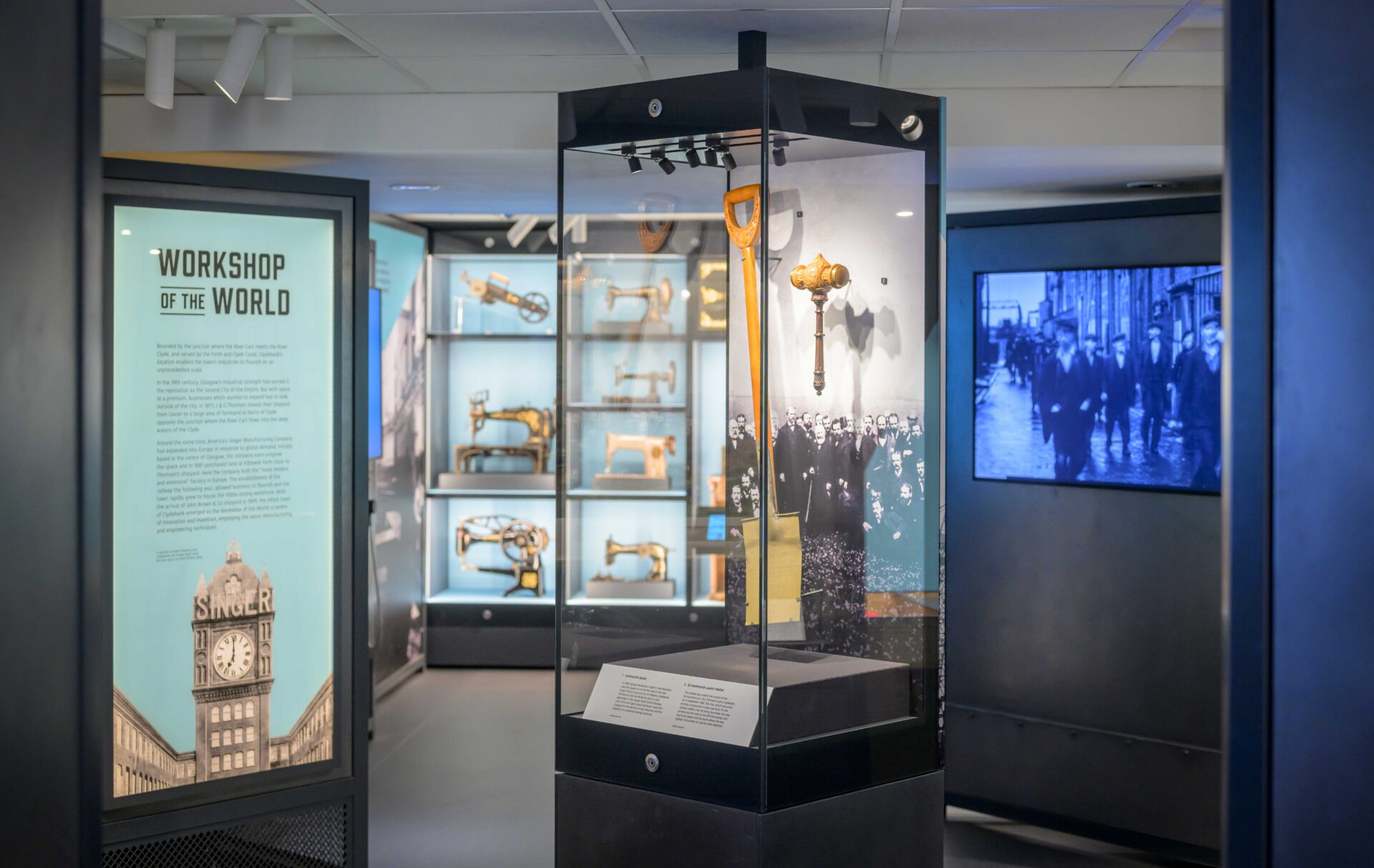
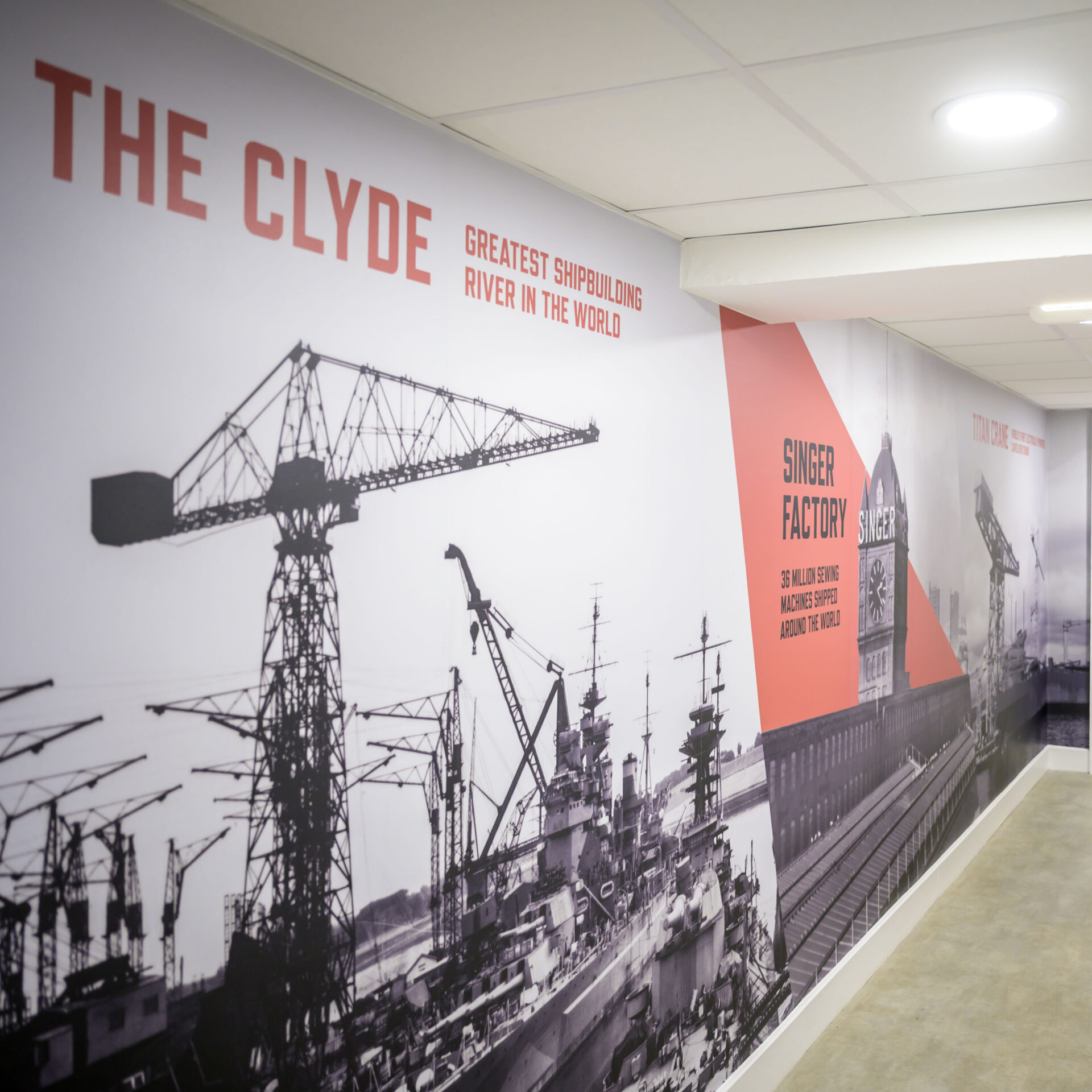
The displays celebrate Clydebank’s industrial past. The Singer Sewing Machine Collection, a Recognised Collection of National Significance, is presented through a series of immersive installations, combining objects with archive film to tell the story of the Singer Factory, once the largest factory in the world. This sits within a wider narrative of Clydebank as the ‘Workshop of the World’, where shipbuilding firm John Brown & Co, helped put Clydebank on the map as a global centre of innovation and invention.
Client
West Dunbartonshire Council
Services
Interpretation Planning
Research & Copywriting
Exhibition Design
Graphic Design
Digital Strategy
Interactive Design
Exhibition Branding
Project Management
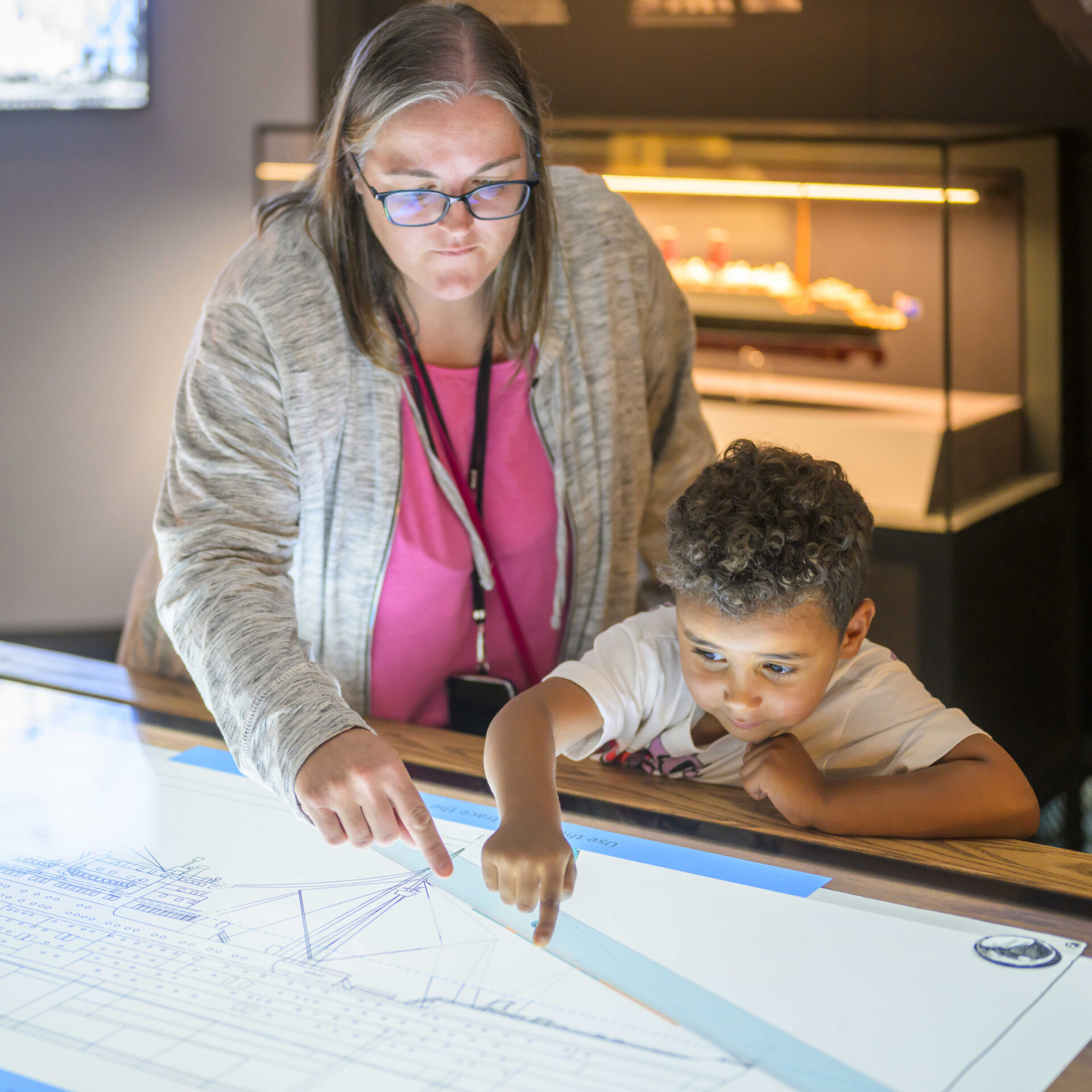
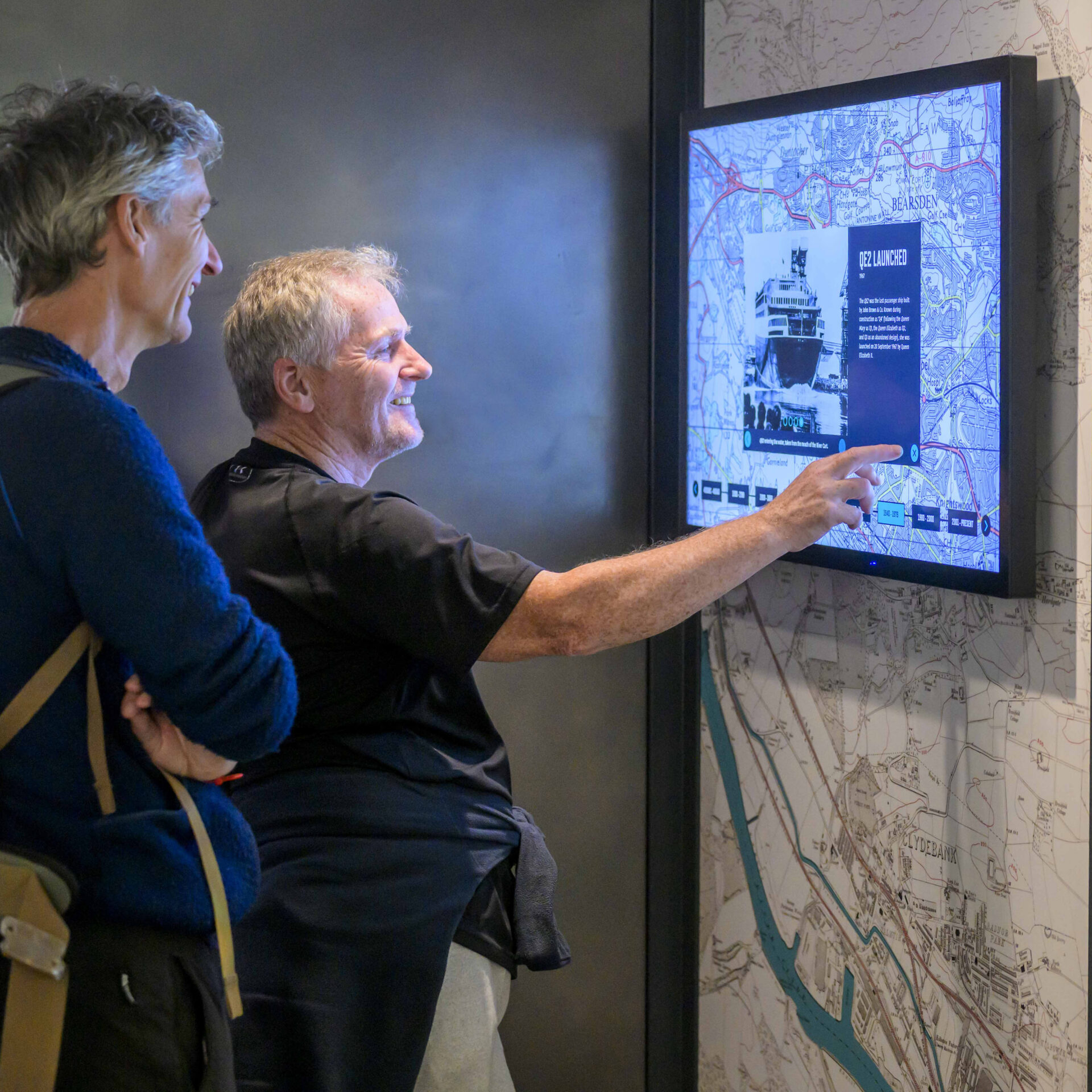
Innovative Interactives
Creating meaningful ways to engage inter-generational audiences, and a build a sense of pride in place, was central to the development of the digital strategy. We took an innovative approach, developing a series of immersive experiences that connect directly to Clydebank’s stories and industries.
Visitors can decorate their own sewing machine using original Singer decal patterns, before seeing their design projected onto a full-scale machine. Elsewhere they can step into the role of the women tracers who worked in the drawing offices of John Brown’s shipyard, carefully tracing over ship plans, before watching their work animate before them. Other interactive elements enable visitors to explore the area through an interactive map and delve into the stories of some of Clydebank’s record-breaking ships.
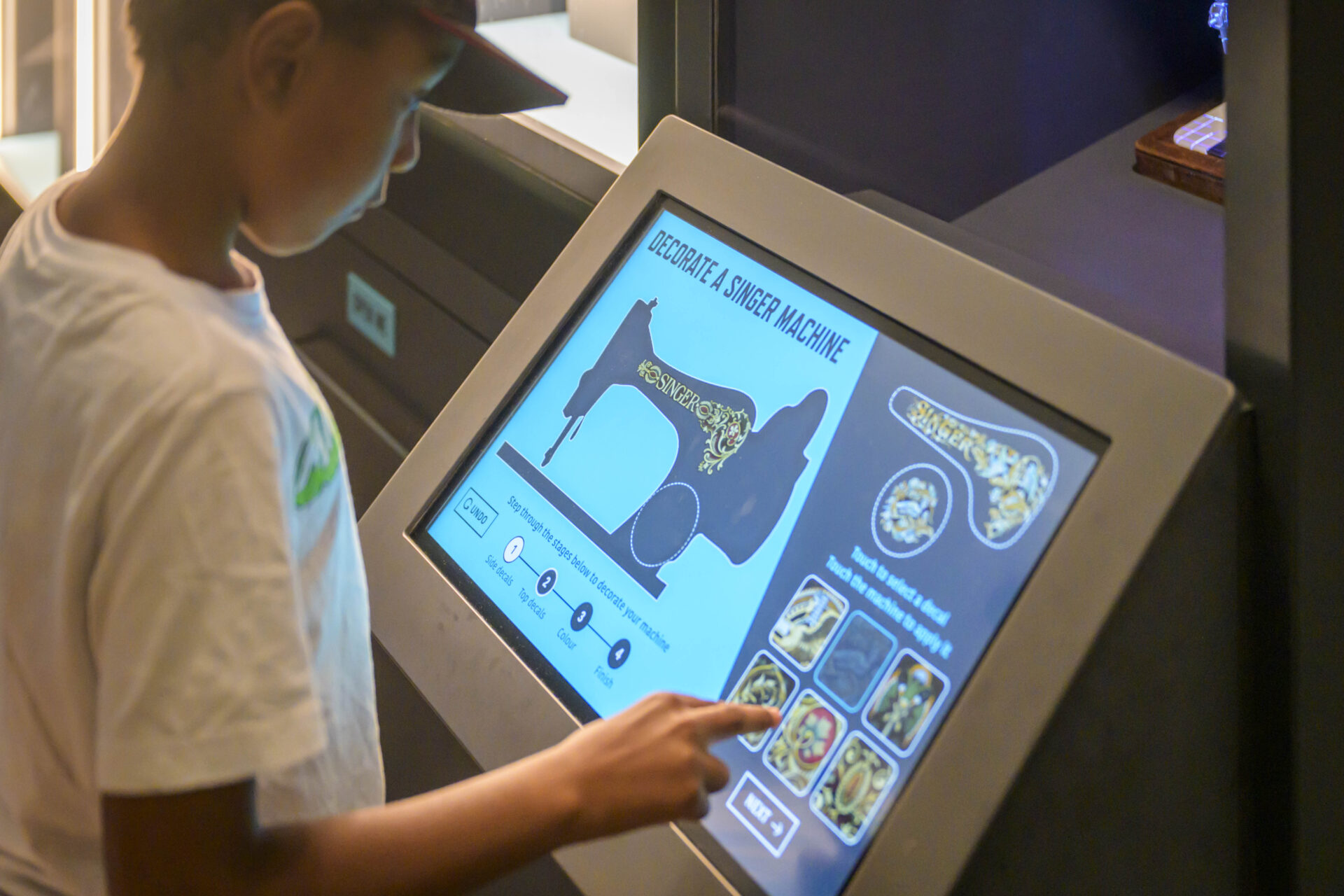
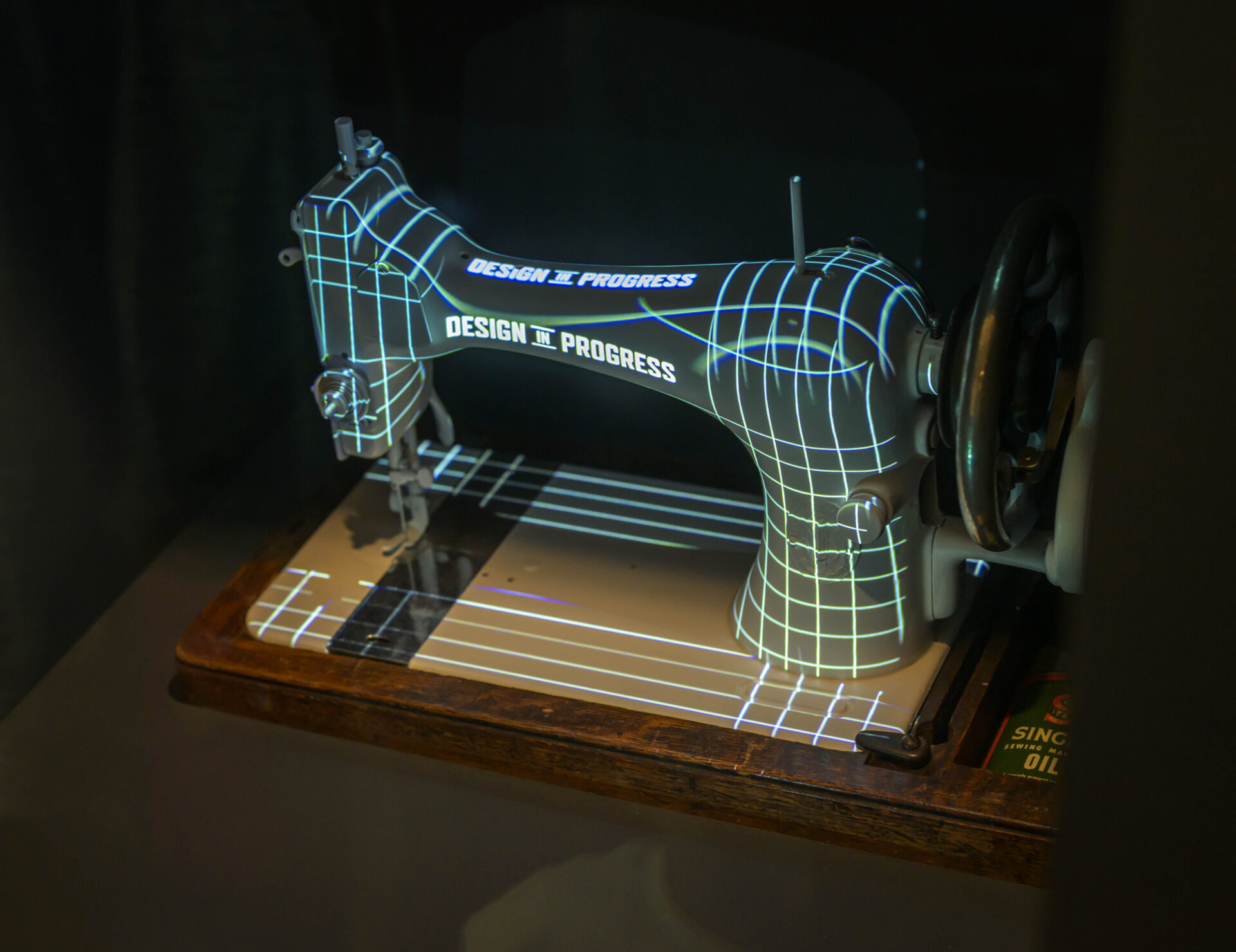
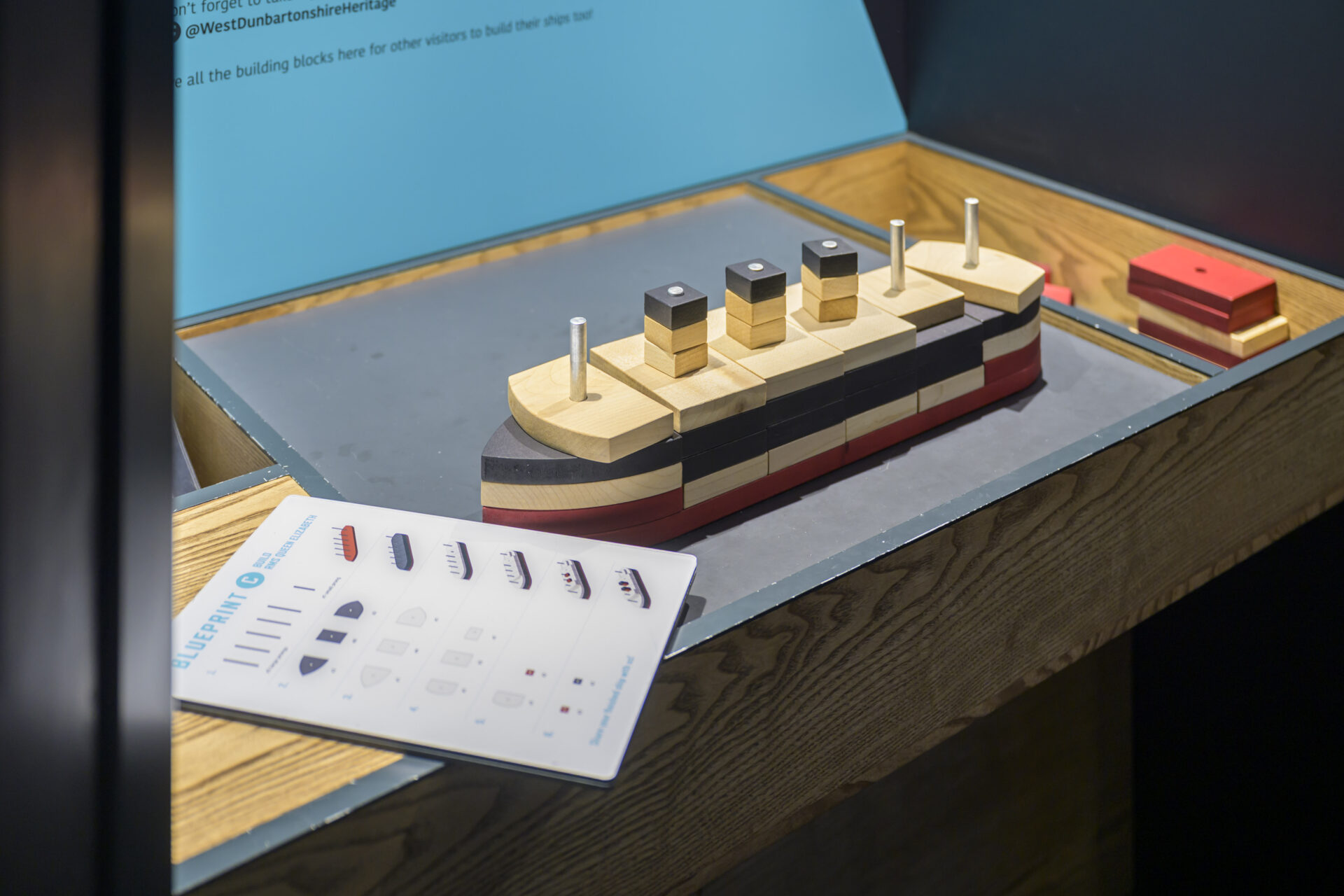
“I made a sewing machine.”
Noah, aged 6
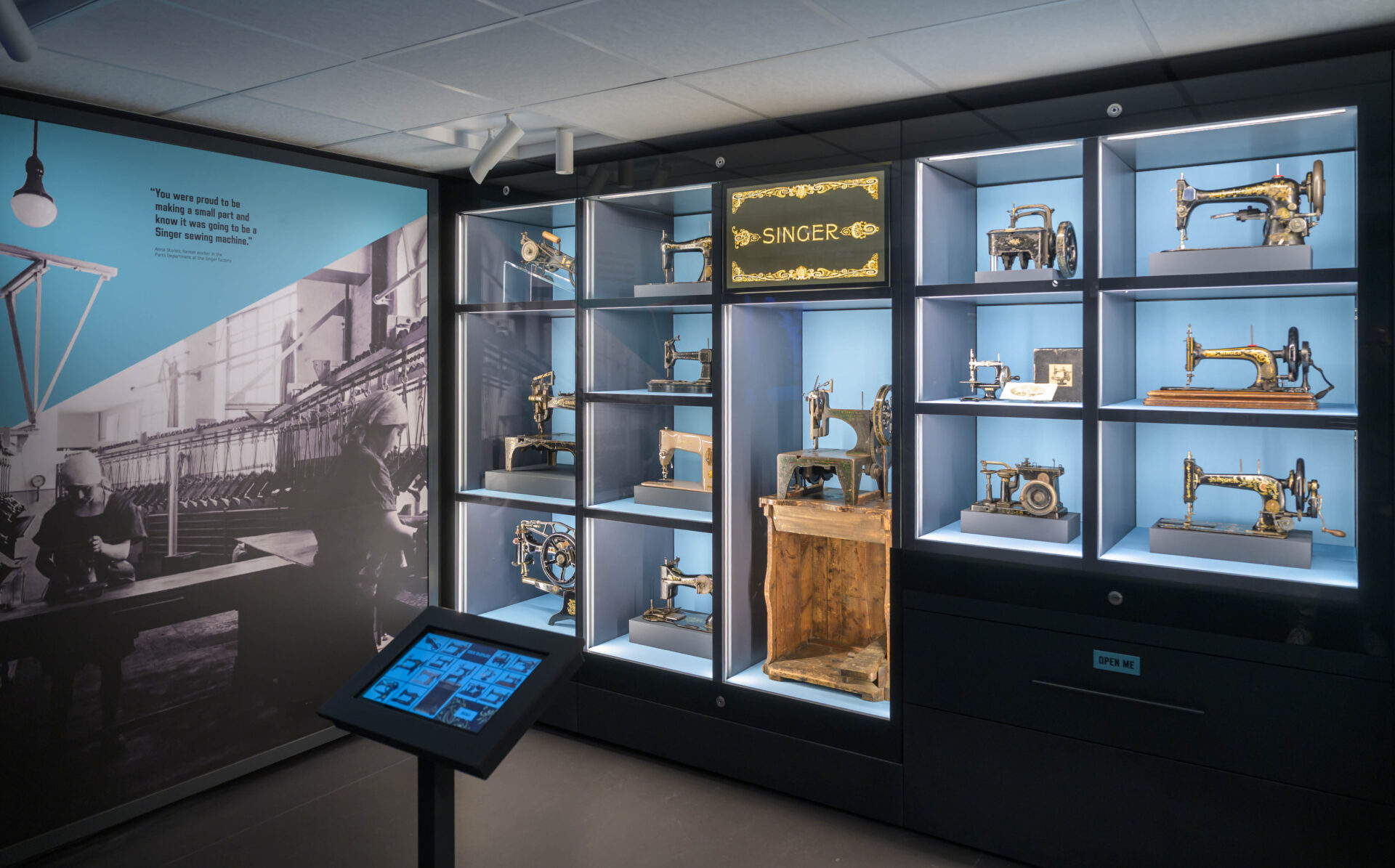
The Collection
At the heart of the museum, the collection traces the making of Clydebank – from industrial powerhouse to close-knit community. Through objects, archive material and local voices, it builds a layered picture of the town’s social history and the people who shaped its enduring ‘Bankie’ spirit.
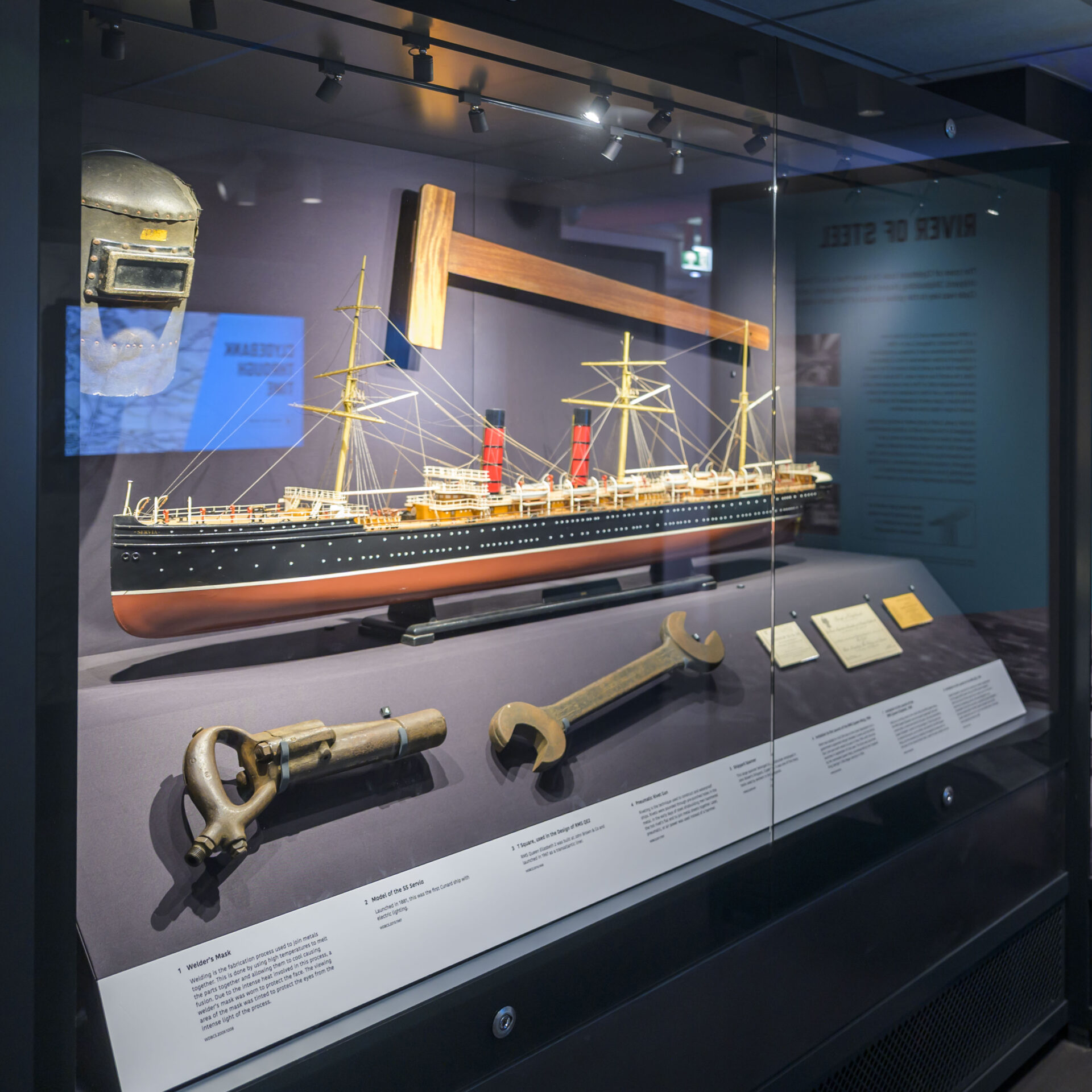
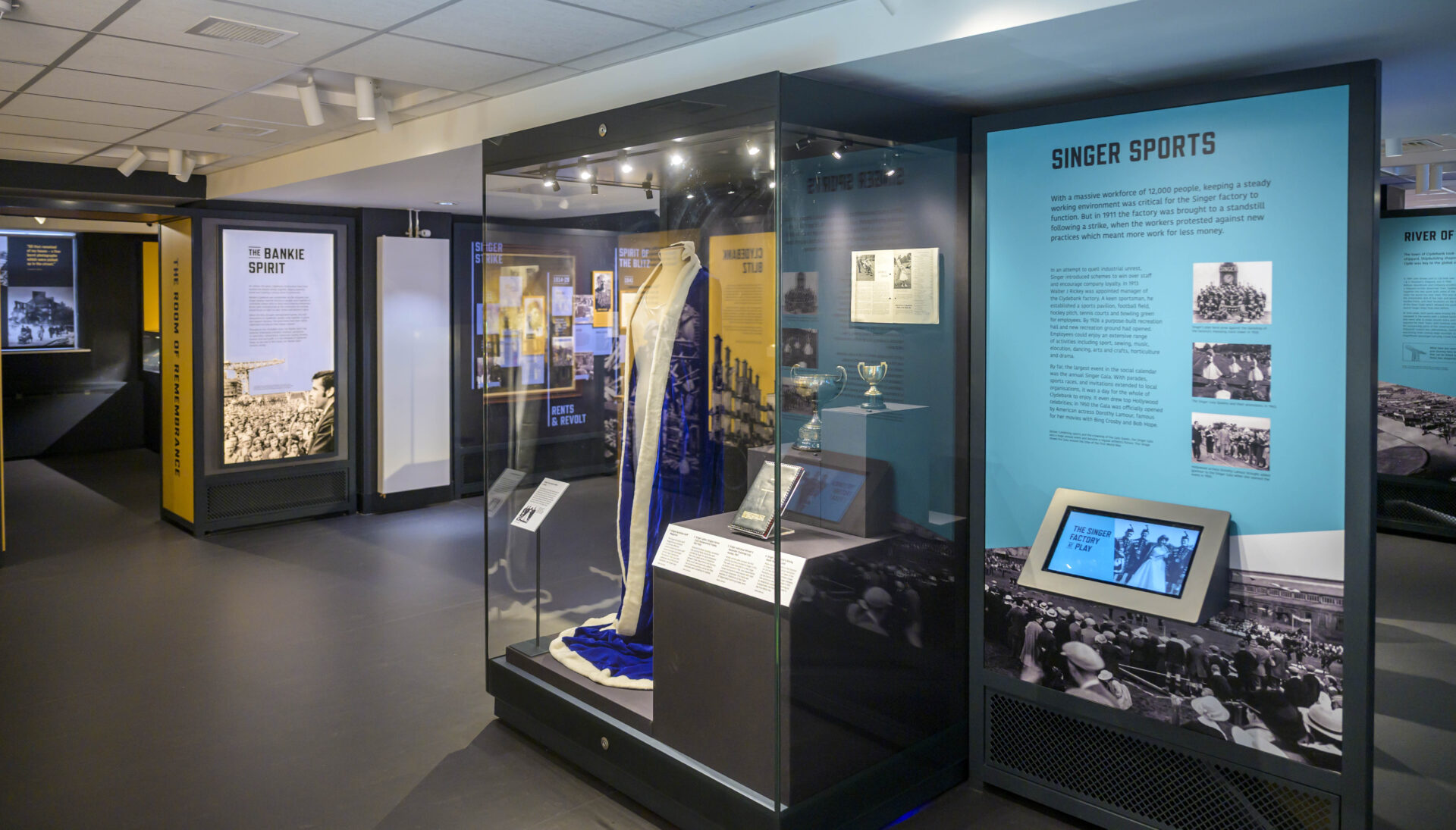
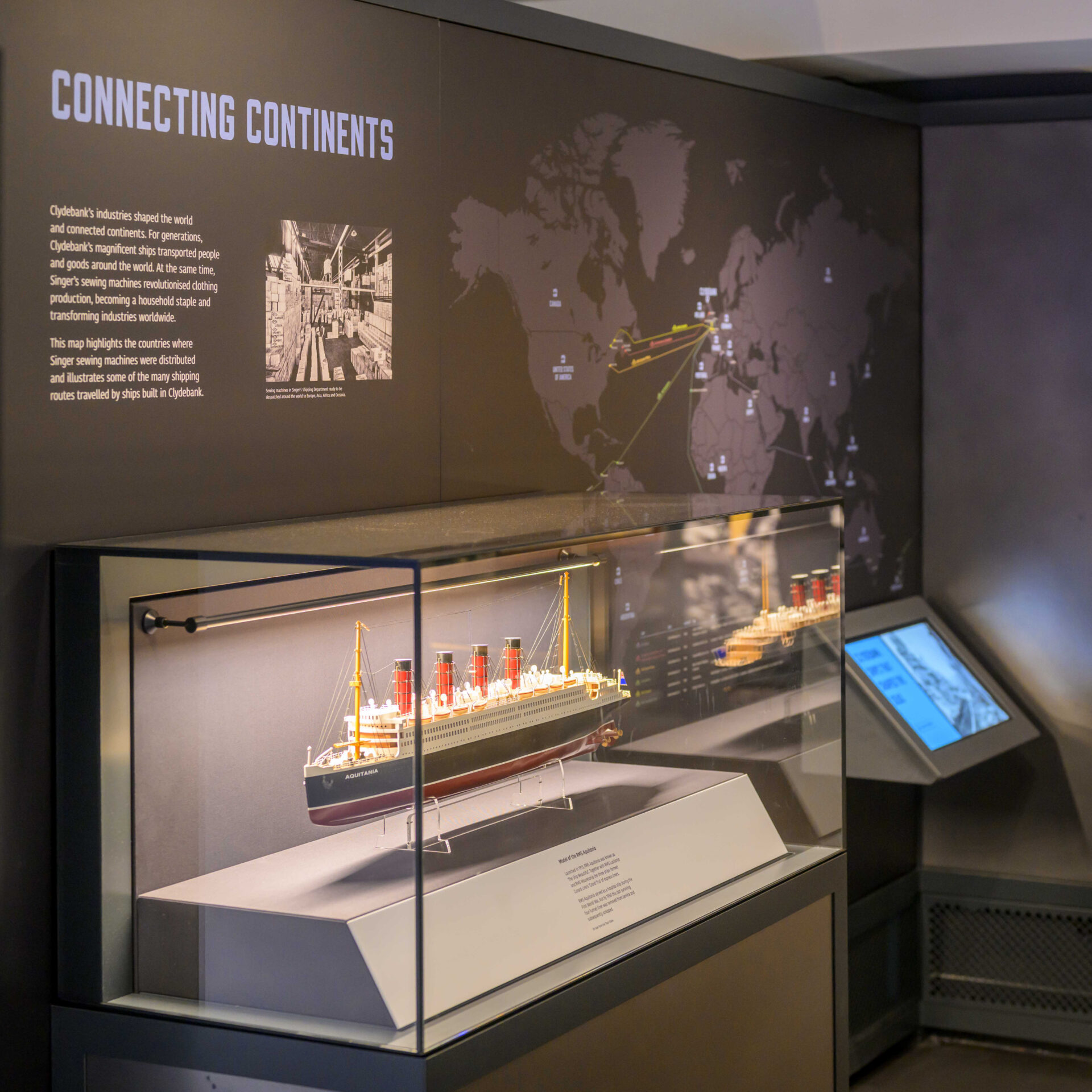
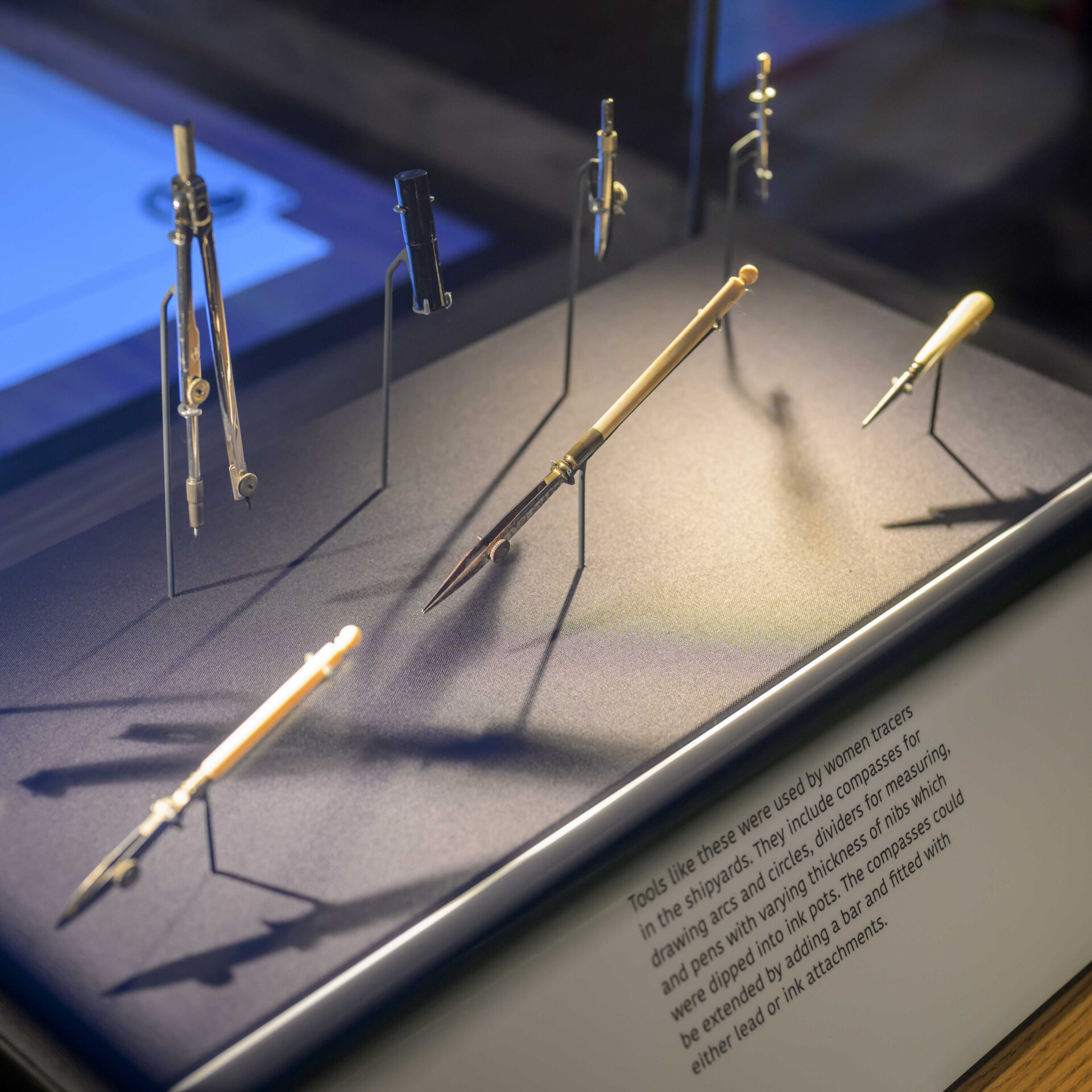
“Walking through the space, there were precious historical artefacts, eye-catching displays and plenty of interactive experiences. Featured on the screens were truly amazing archived videos of maps, workers and the visit of Queen Elizabeth II in 1938.”
Clydebank Post
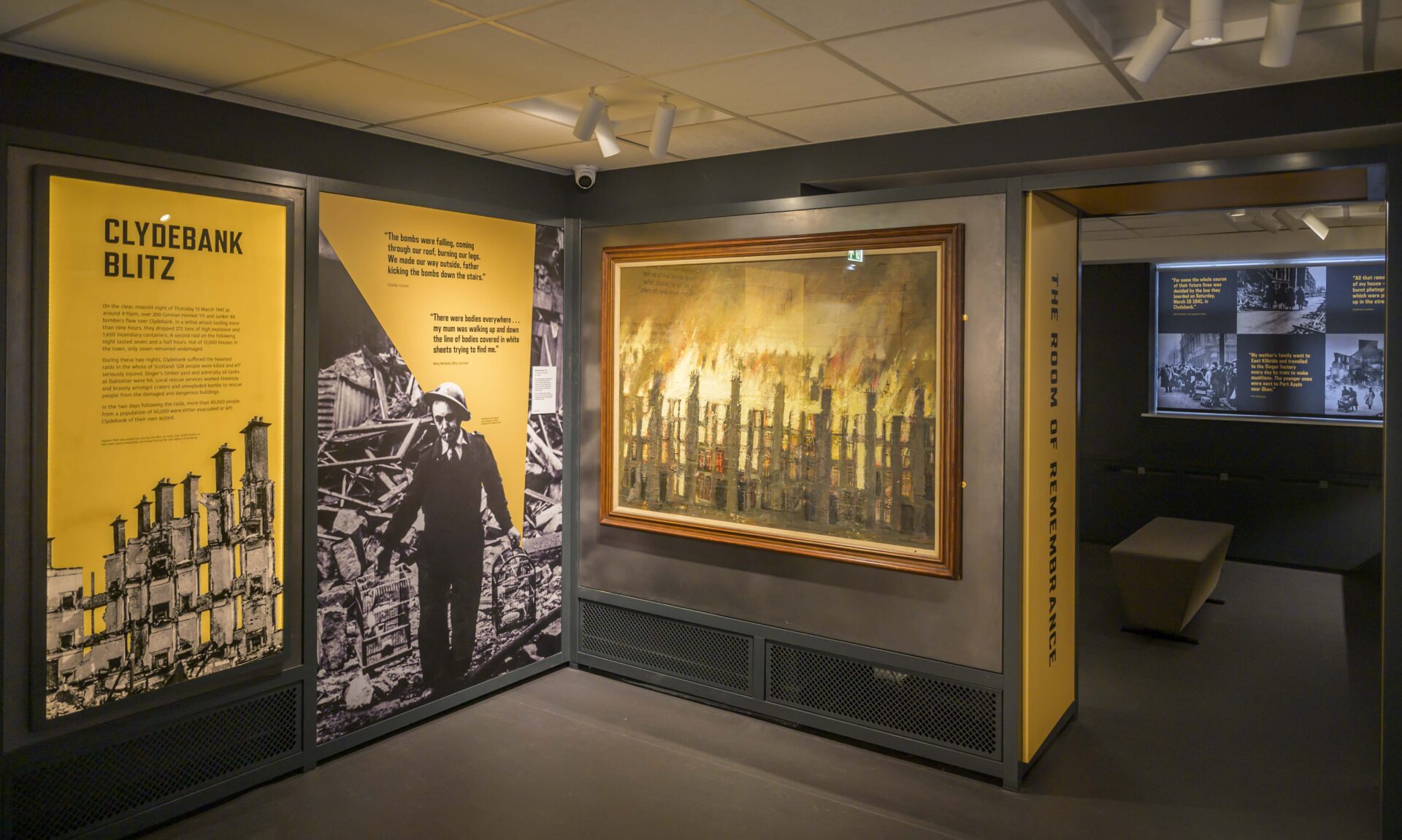
Room of Remembrance
We designed the Room of Remembrance as a dedicated memorial within the Museum to honour the 528 people who lost their lives during the Clydebank Blitz on 13 and 14 March 1941. The names and ages of those who died are screenprinted in gold across a full wall, as a simple tribute at the heart of the space.
Alongside this are survivor accounts, offering personal reflections on the impact of the bombing. In the aftermath, more than 40,000 people, around 80% of Clydebank’s population, were displaced. Families were separated and many thousands evacuated. Objects and stories within the space tell of the resilience of the community in the face of this devastating attack.

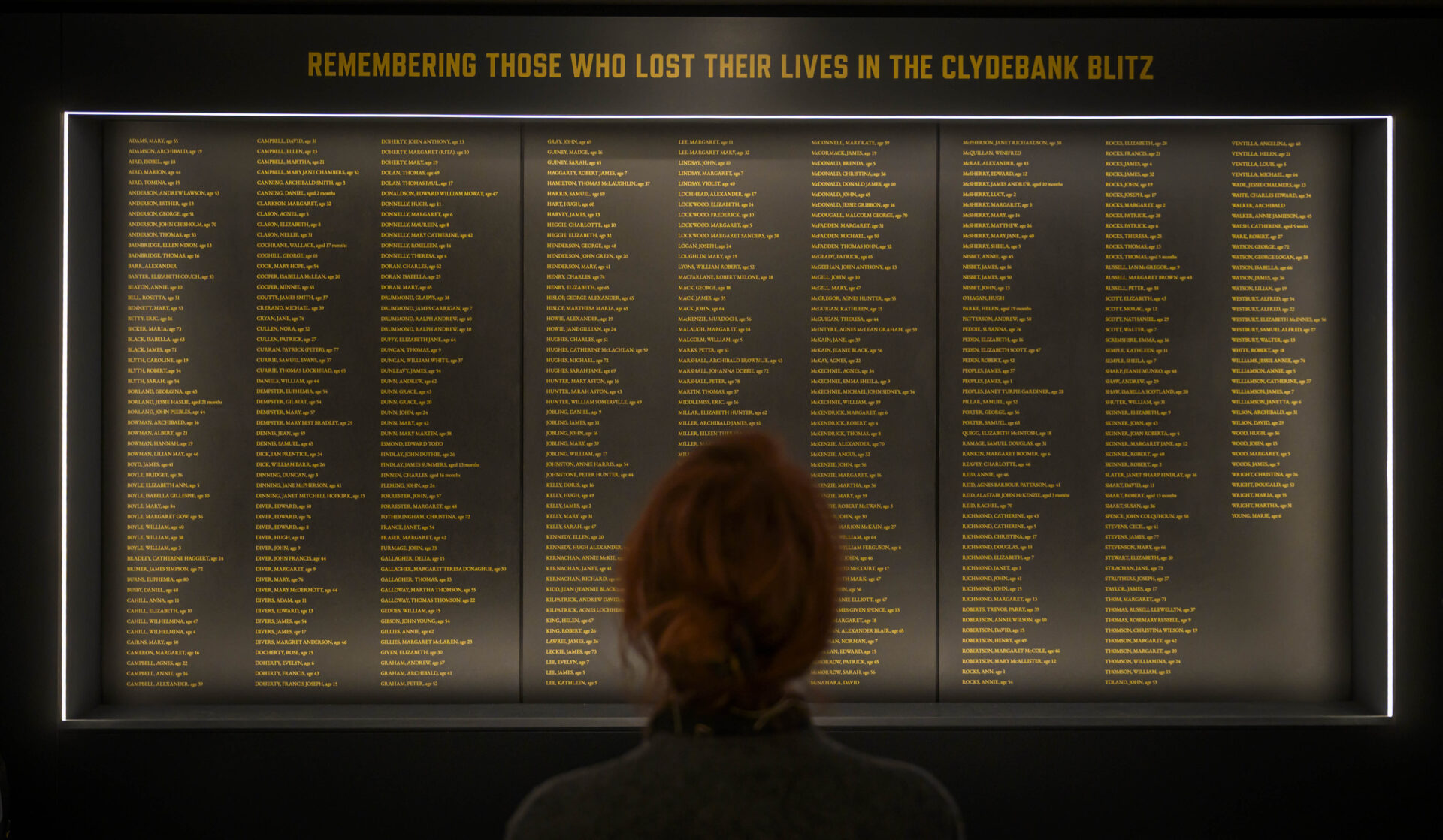
“I am very thankful that Clydebank now has a fitting memorial and a tribute to its extraordinary people and skilled workforce.”
Visitor feedback
The Clydebank Brand
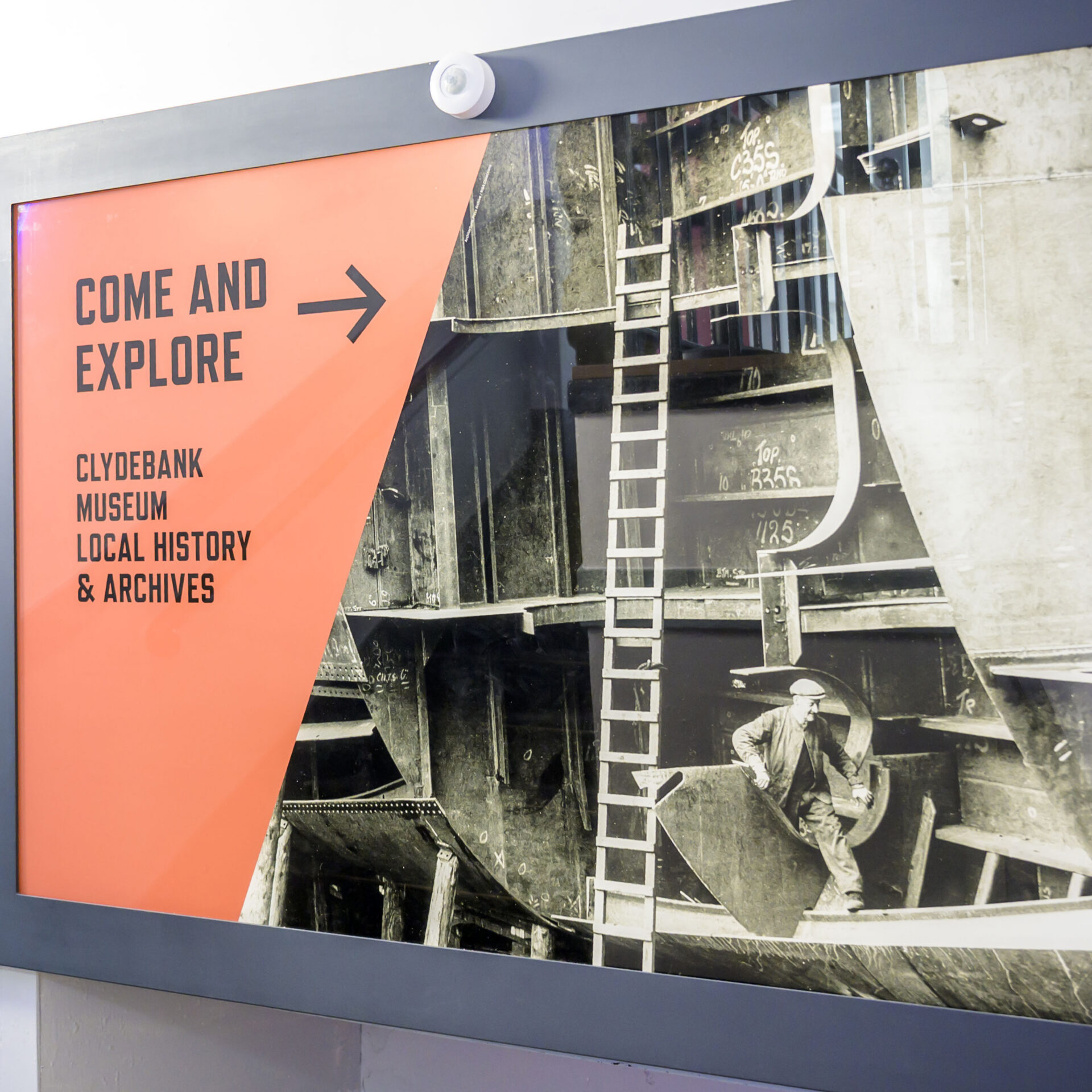
The identity for the Museum and Local History Archives is rooted in Clydebank’s culture of making – drawing on the visual language of industry, production and scale. We developed a bold graphic approach that takes cues from shipyard markings, factory signage and historic typography, translating these into a contemporary system that is both impactful and grounded in place.
The bold colour palette, inspired by industrial and maritime references, was developed to offset the predominantly black and white archive photography. The identity was also designed to work as large-scale immersive graphics and more detailed interpretation. It is also carried through into a clear and recognisable wayfinding strategy, which uses colour, graphic forms and typography to guide visitors intuitively through the building.
“This is an absolutely fantastic space which has something of interest for everyone – whether you’re looking to trace your family history, explore the town’s industrial roots, or simply enjoy learning more about the place we call home.”
Councillor William Rooney, West Dunbartonshire Council