Rewrite the Future
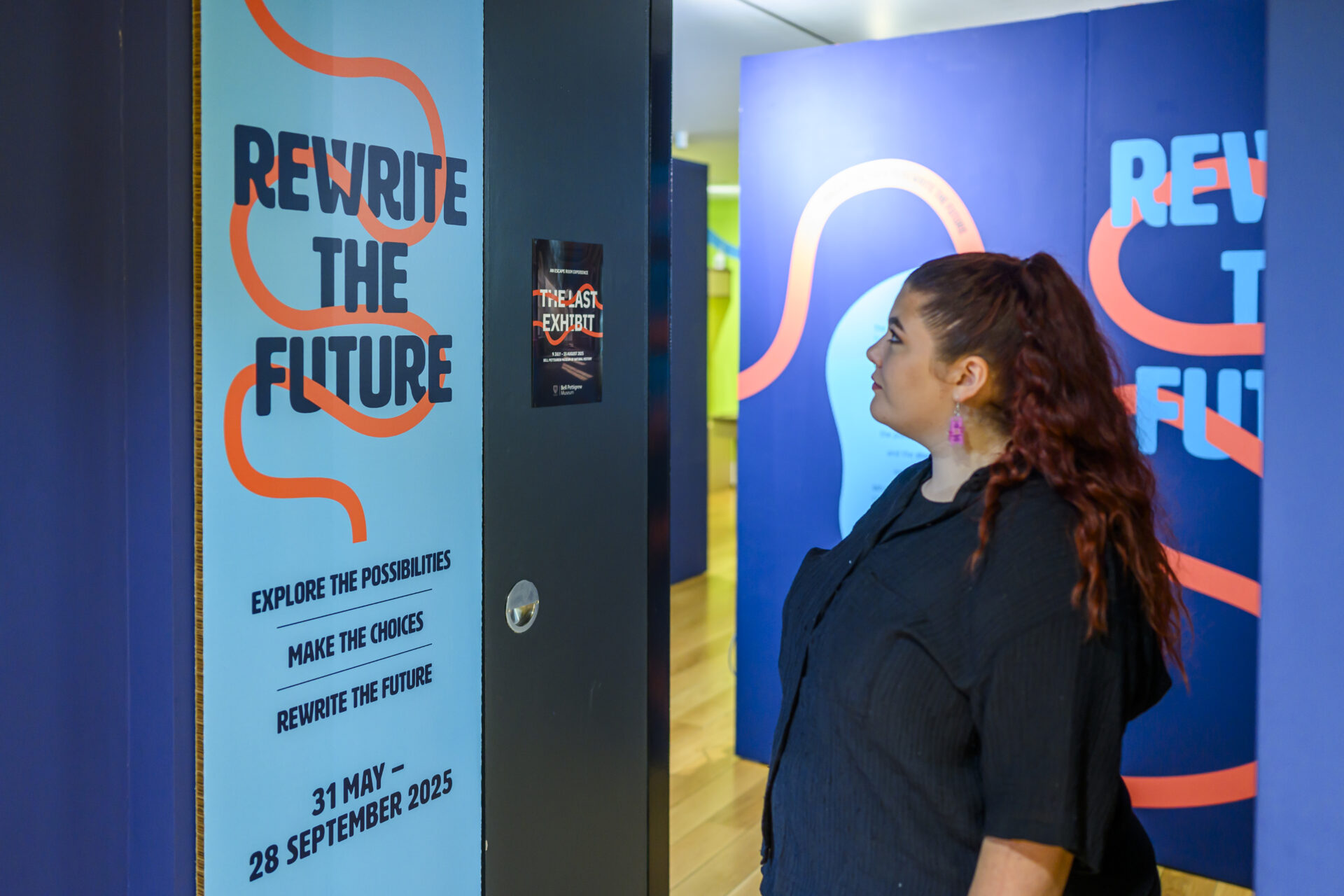
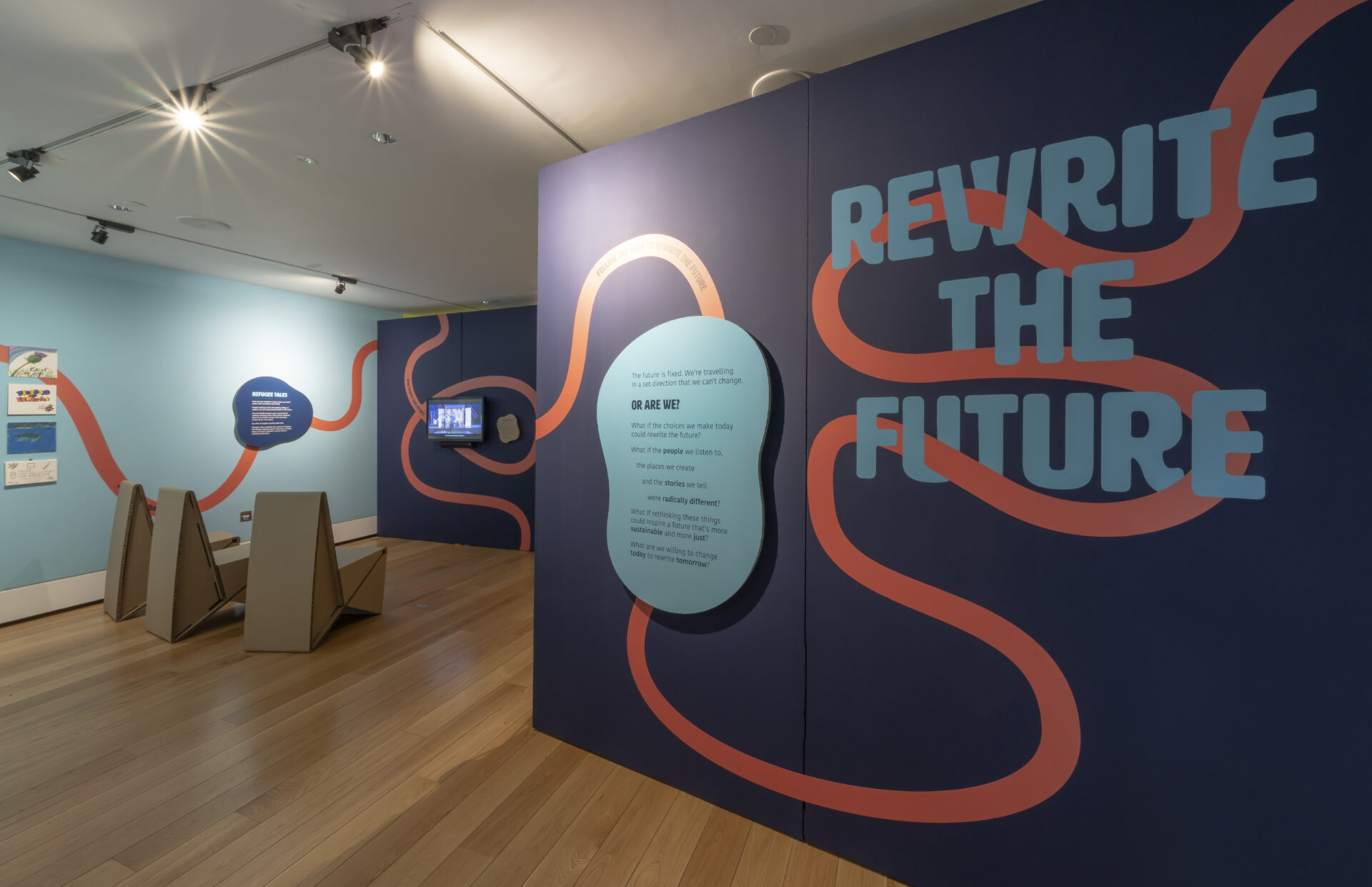
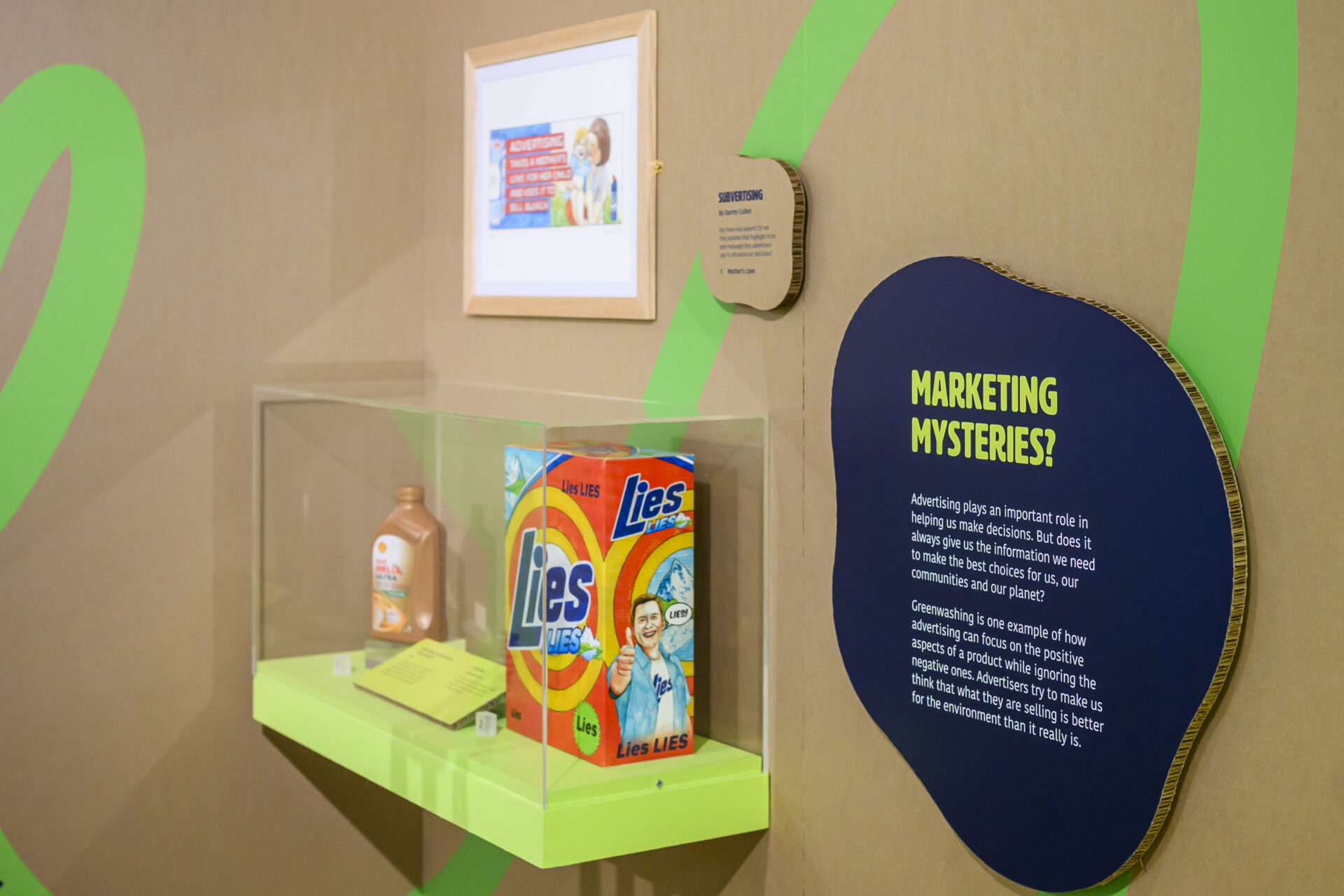
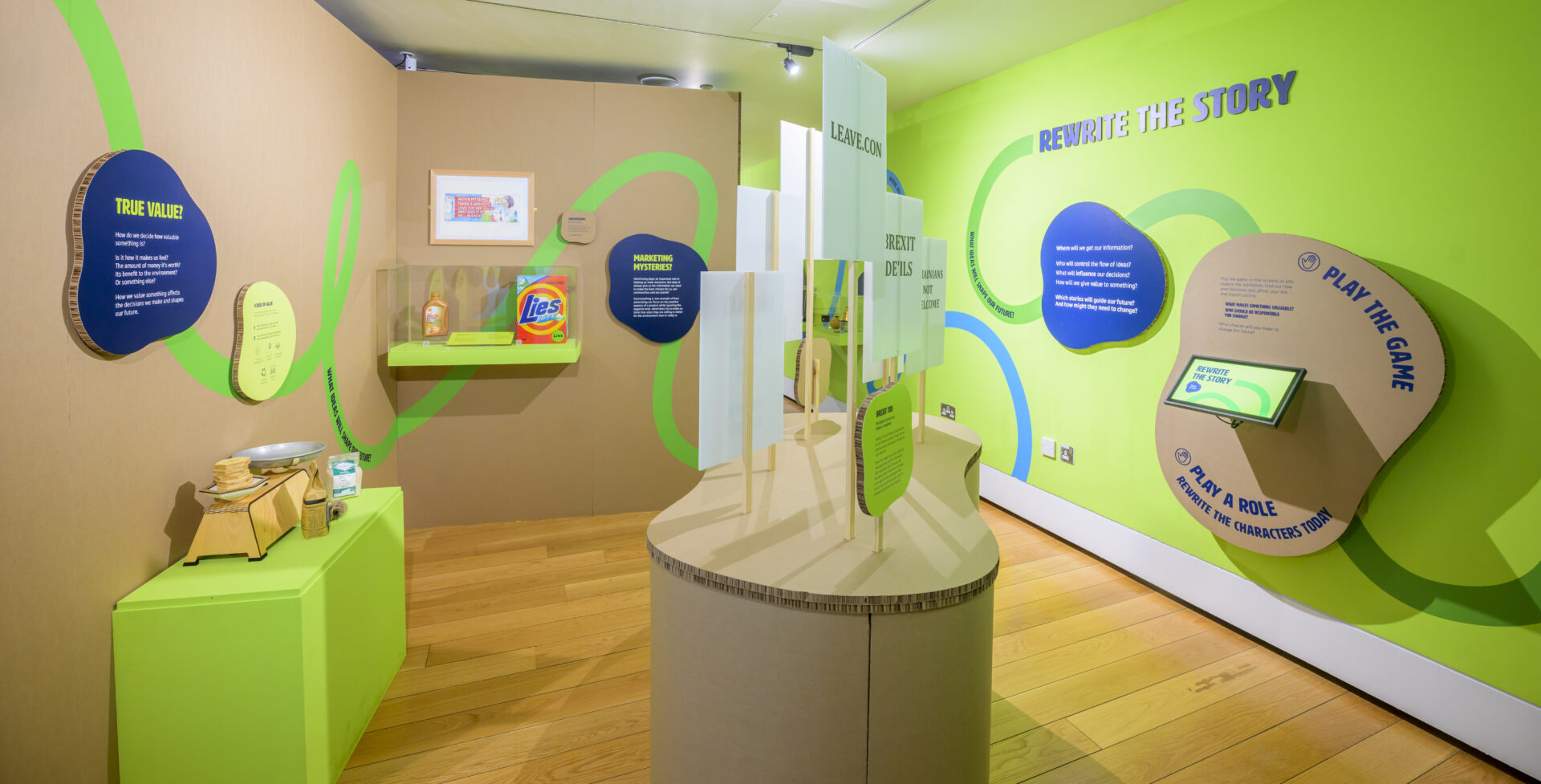
Housed within the Wardlaw Museum at the University of St Andrews, Rewrite the Future, is a temporary exhibition exploring big ideas around how society can act differently to create a more just and sustainable world. In response to this theme, we designed the exhibition as an experiment in sustainability, building everything, from walls to work surfaces and from chairs to labels, in an innovative recycled and fully recyclable cardboard material.
Client
University of St Andrews
Services
Exhibition Design
Graphic Design
Digital Strategy
Exhibition Branding
Marketing Campaign Graphics
Project Management
Sustainable design
From the outset, sustainability shaped our every design decision. We researched and tested materials capable of withstanding heavy visitor use while minimising waste and carbon impact. Temporary exhibitions are often resource-intensive, but by using a high-strength cardboard, we achieved an estimated 75% reduction in waste and carbon compared to traditional approaches.
At the close of the exhibition, around 80% of the materials created for the displays will be reused or recycled. By challenging conventions, Rewrite the Future demonstrated that sustainable exhibition design is not only possible, but is also impactful.
“Studioarc’s approach significantly reduced our negative impact on the planet.”
Matt Sheard, Head of Experience and Engagement, University Collections and Museums, University of St Andrews

Customising Cardboard
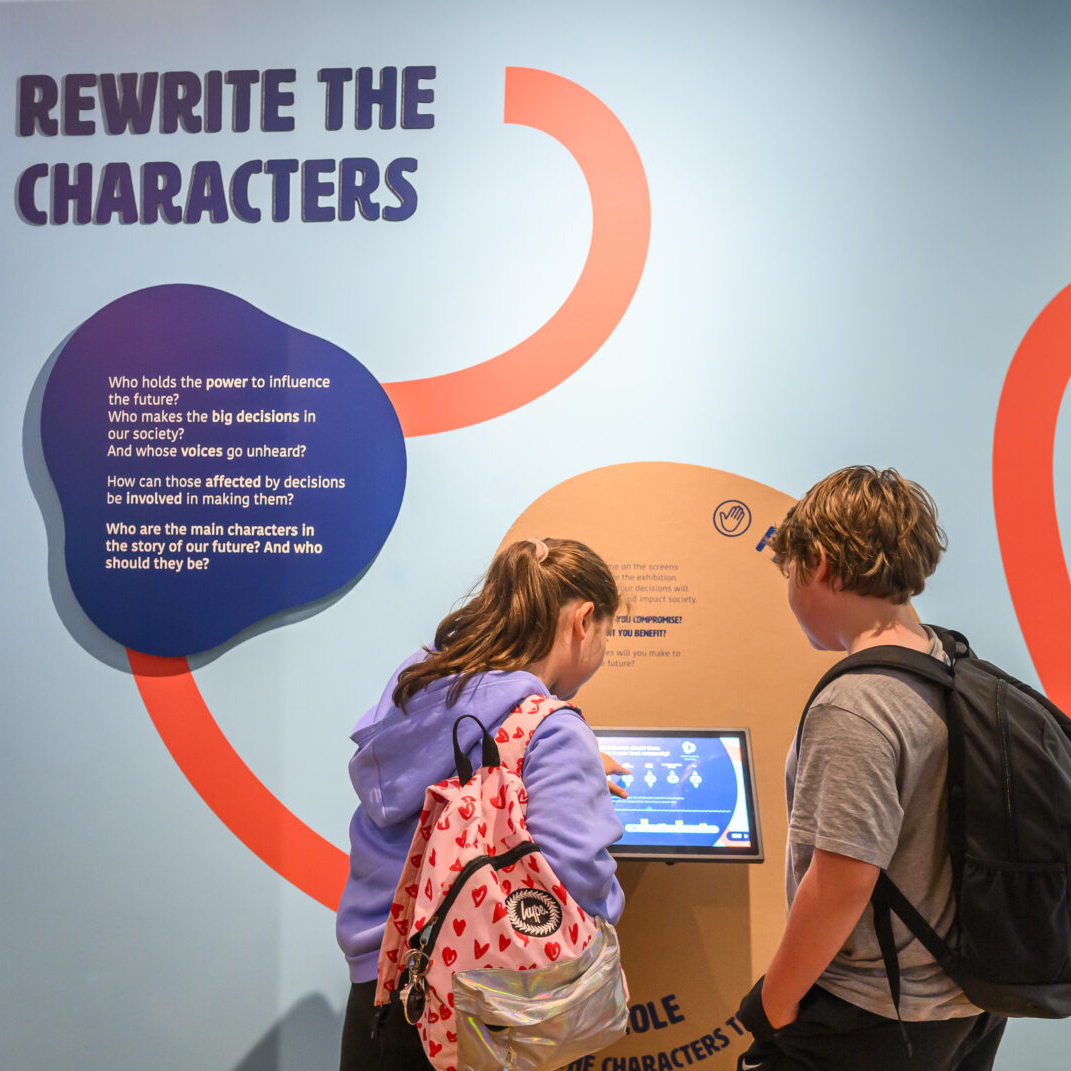
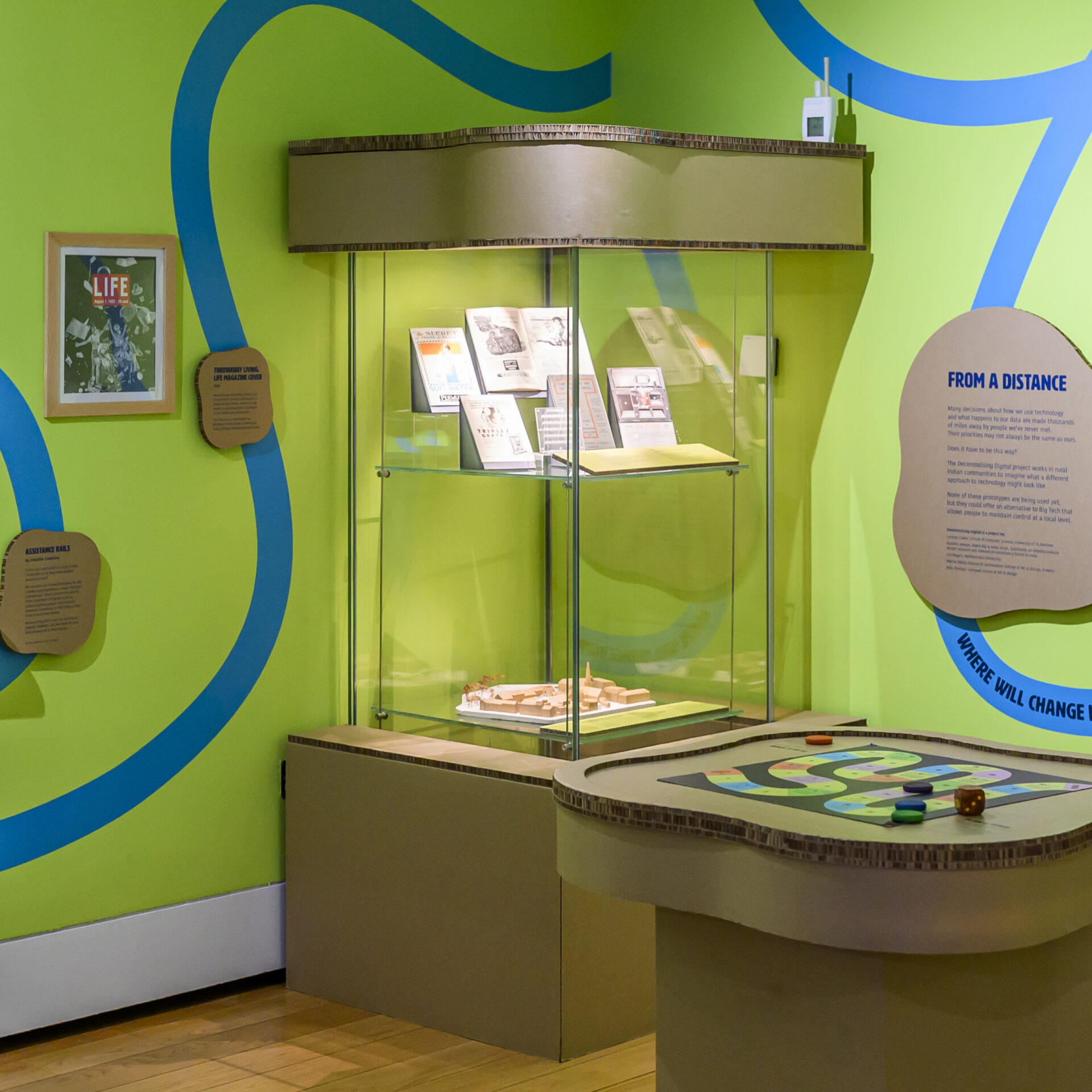
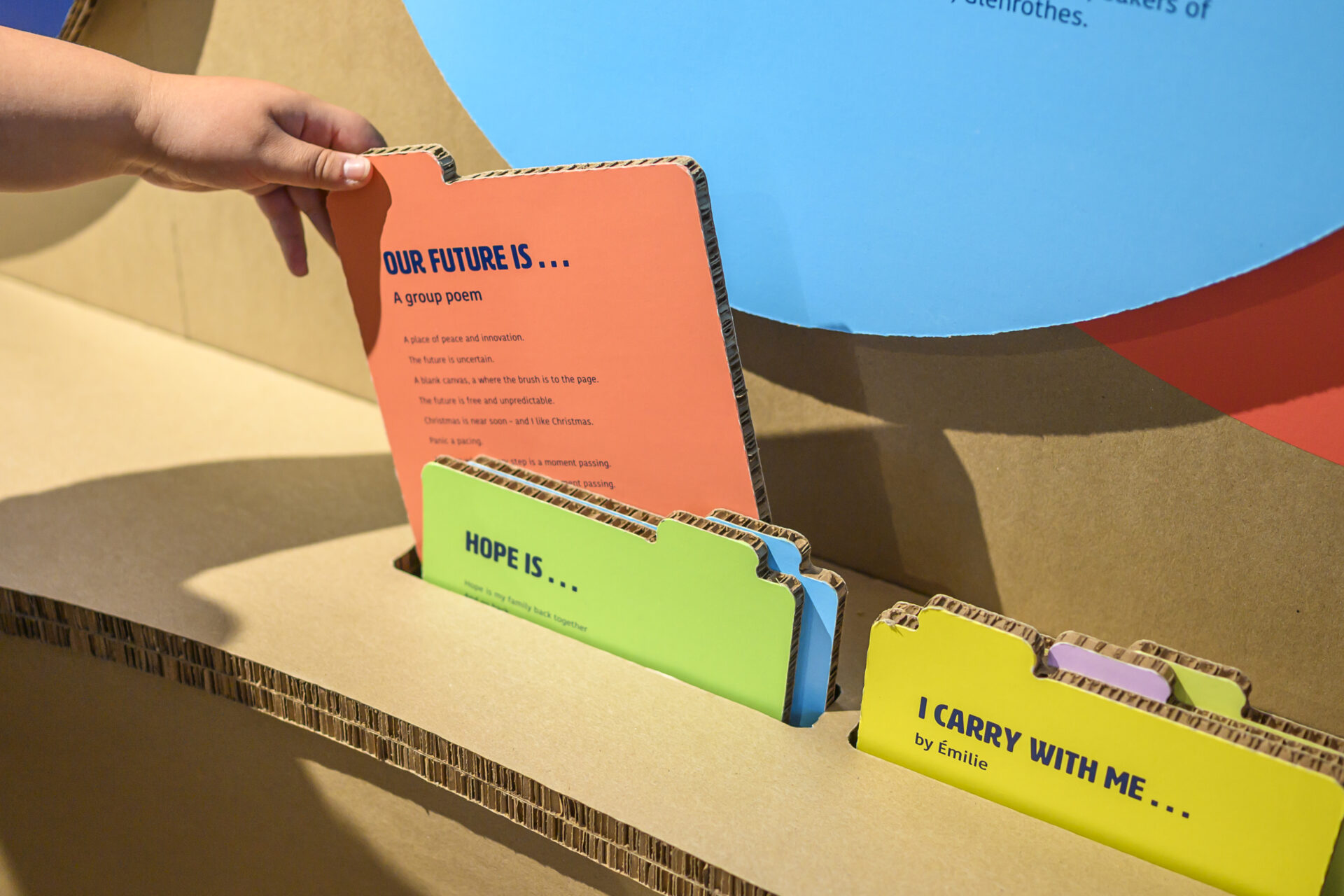
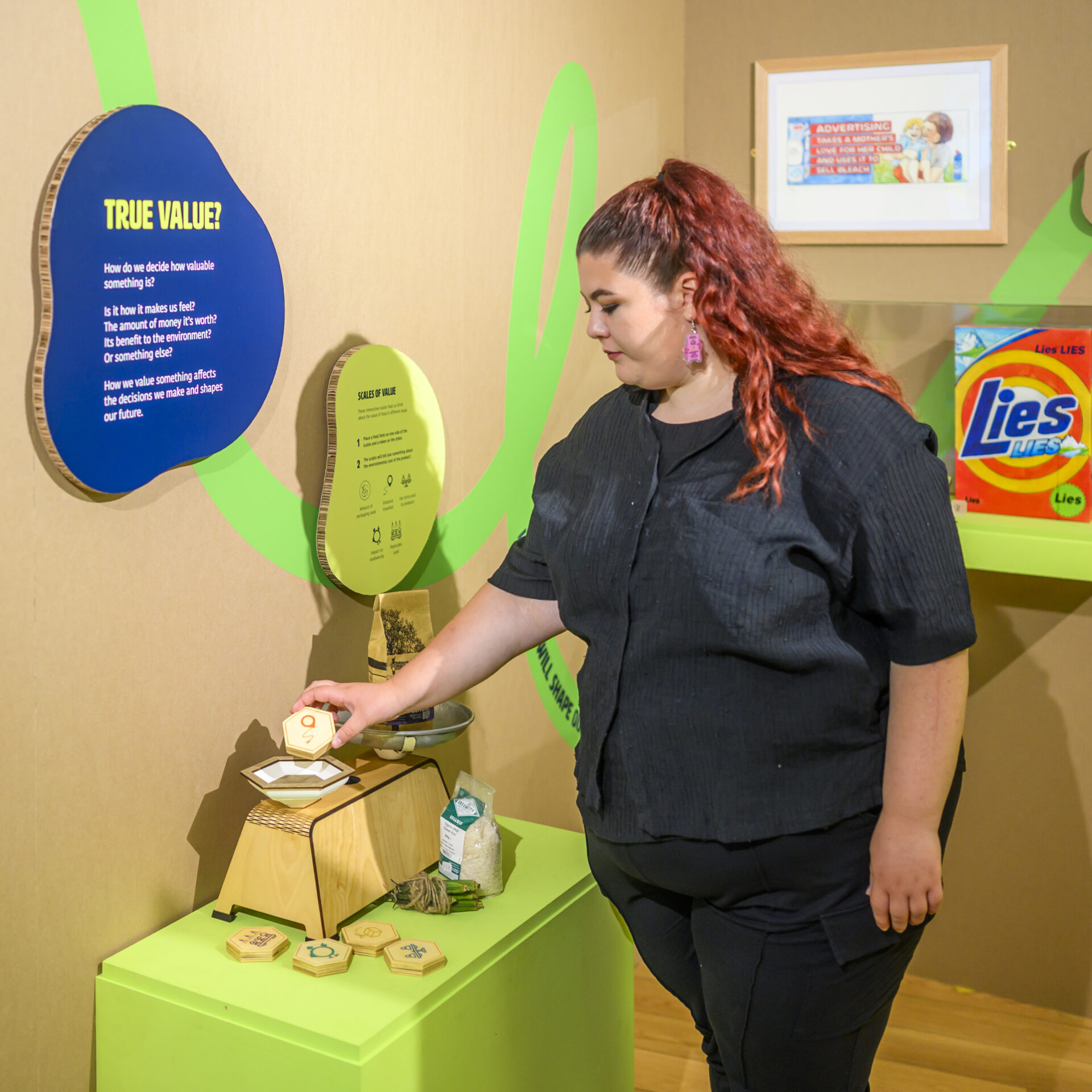
Working with the manufacturer, we undertook R&D to push the possibilities of cardboard design. The exhibition featured structurally stable forms including chairs and stools, curved workbenches, museum case cladding, touchscreen housings and hands-on interactive elements.
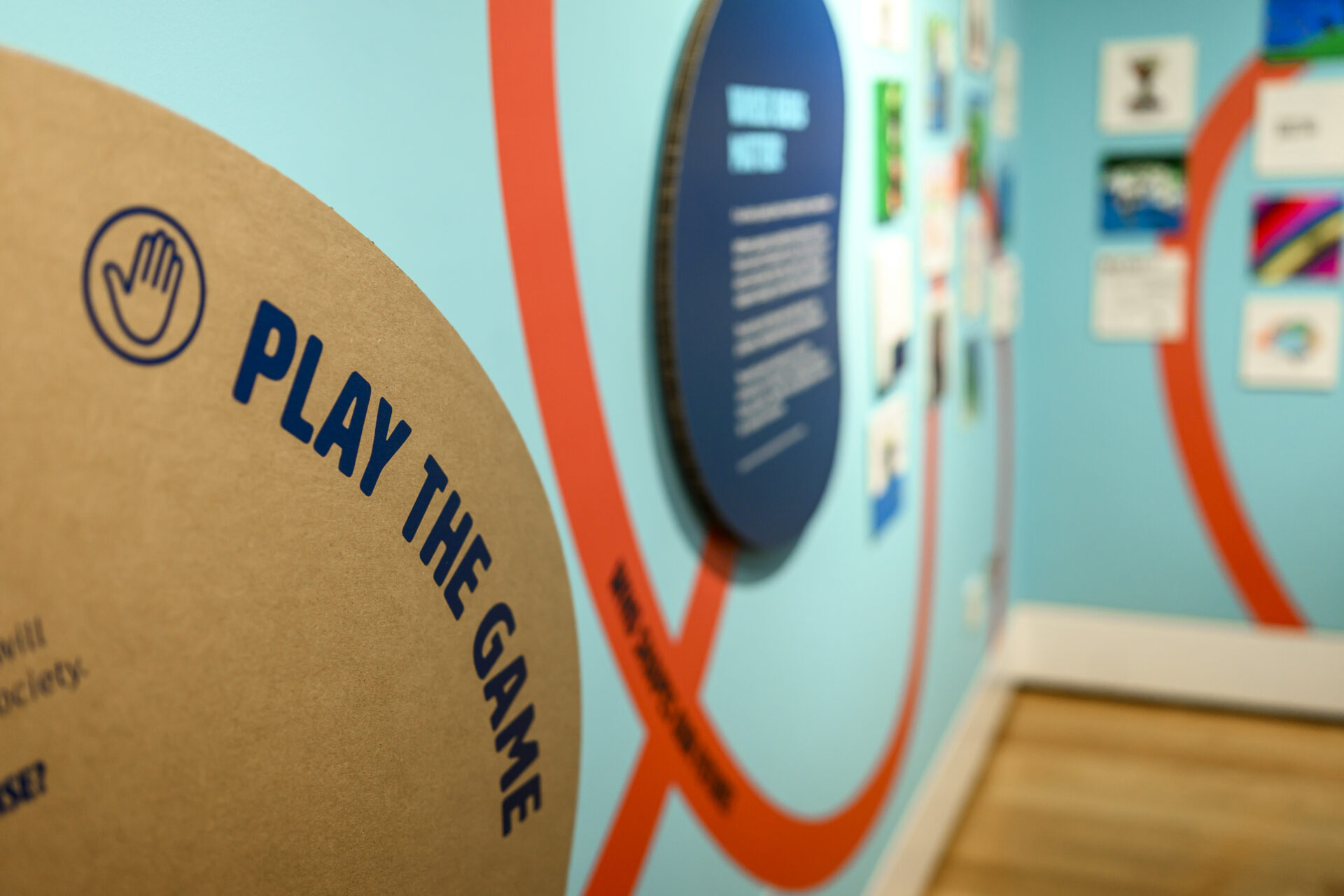
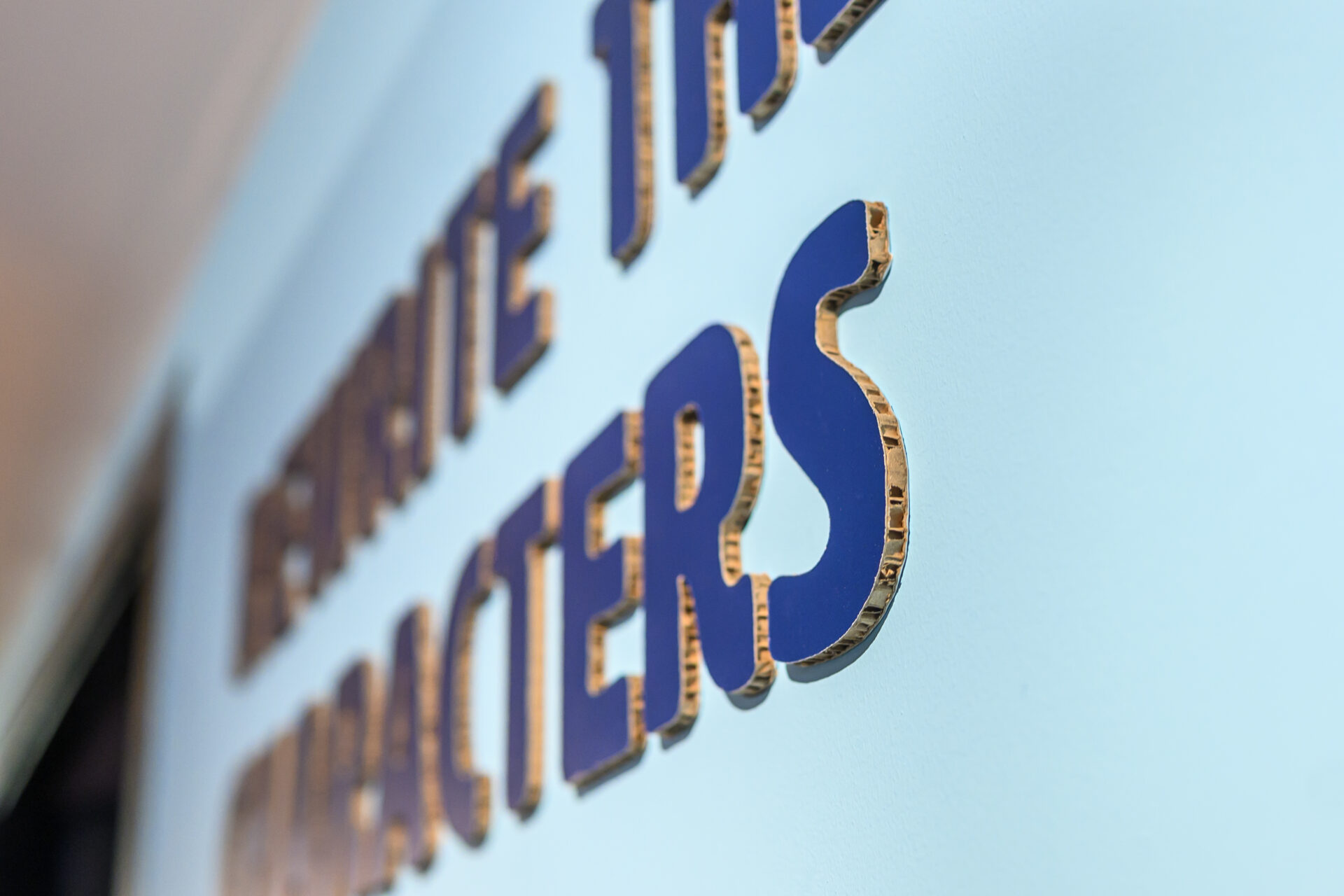
Graphics, ranging from individually cut letters to interpretation panels and object labels were manufactured from the same material, formed into organic shapes. Colour was used to define the different chapters of the exhibition, and while much of the cardboard was left raw, printed areas introduced bold colour, bringing energy and impact to the displays. A printed ribbon threaded throughout the whole exhibition, linking themes, posing questions and guiding visitors on a journey which invited them to Rewrite the Future.
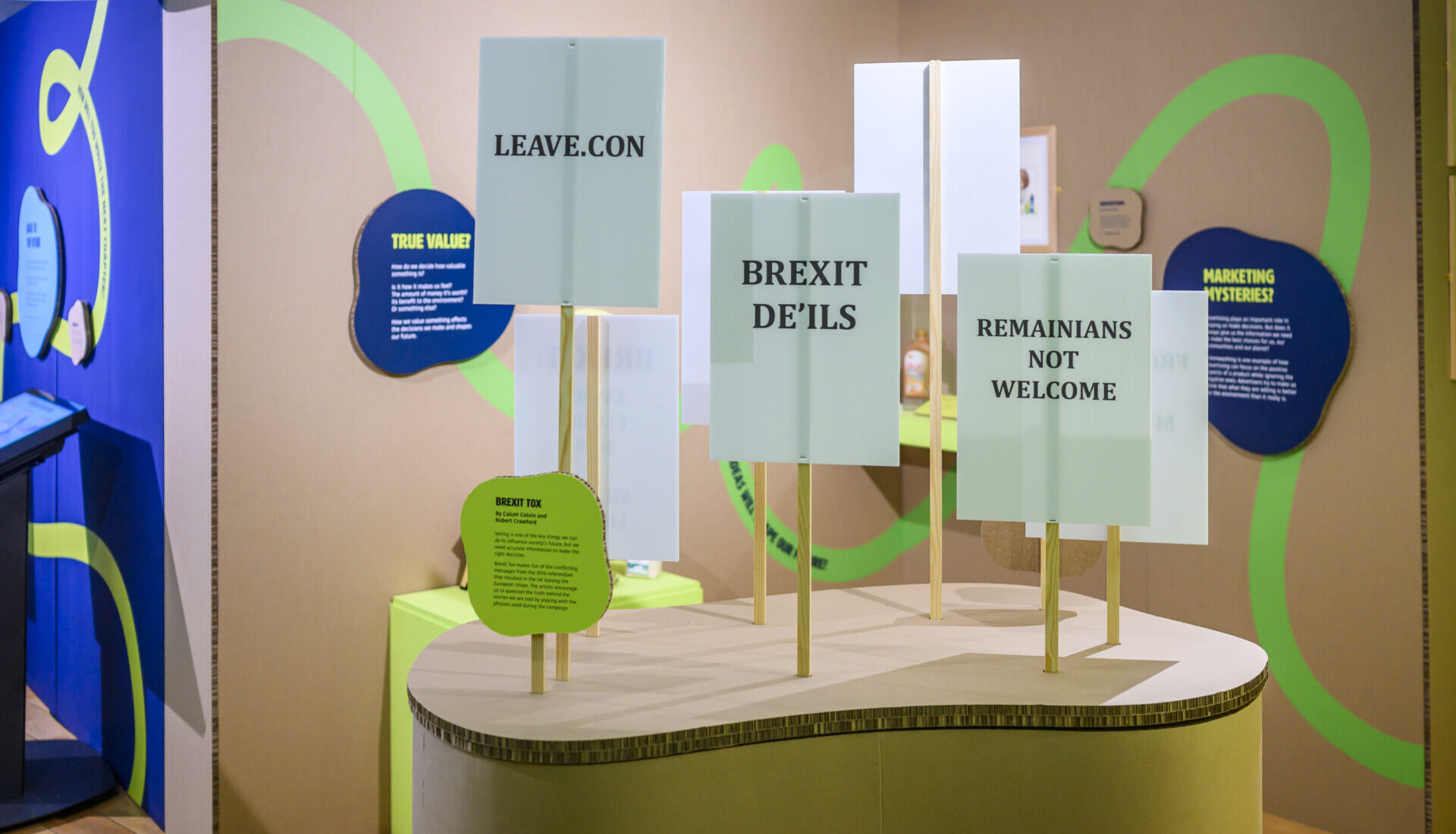
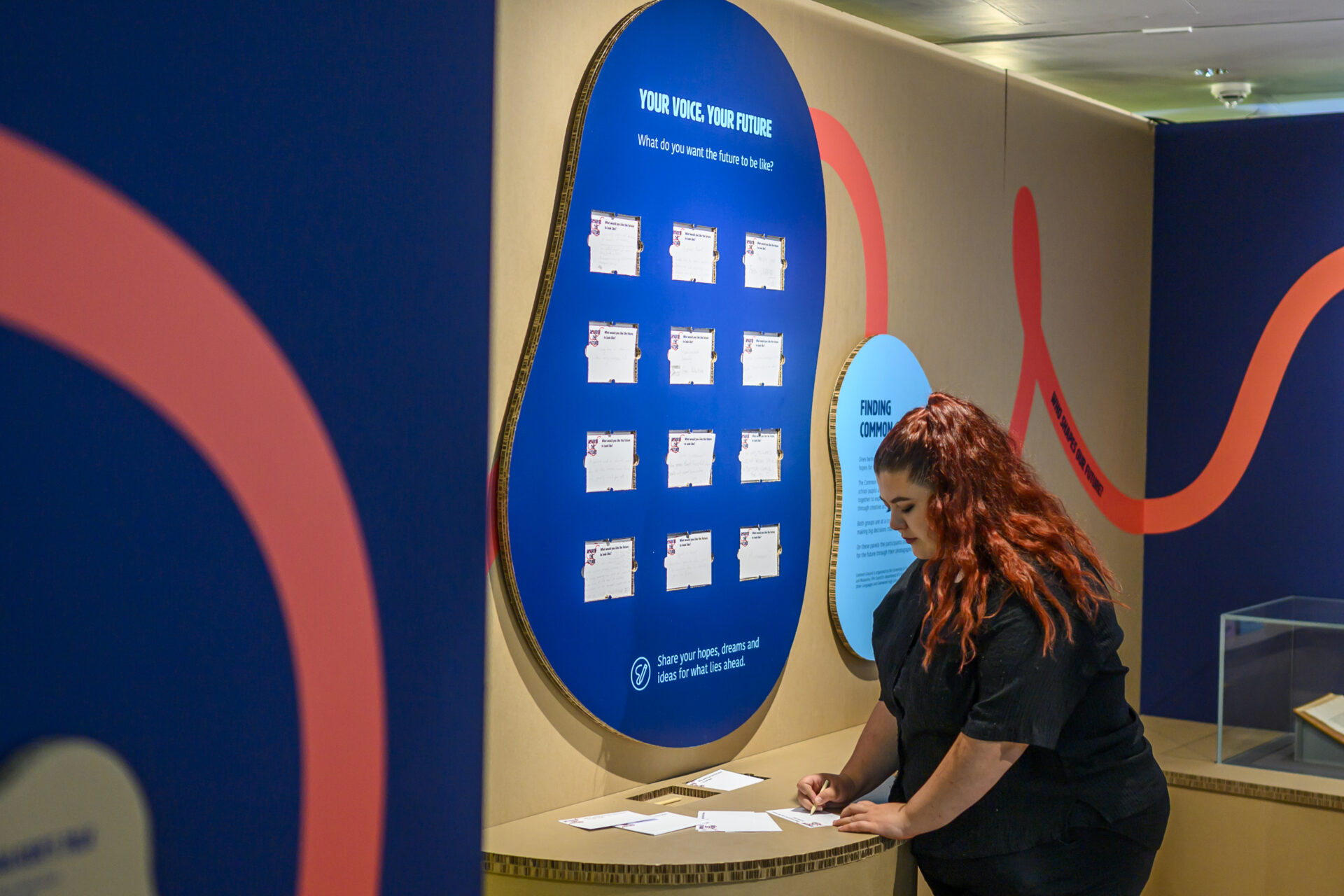
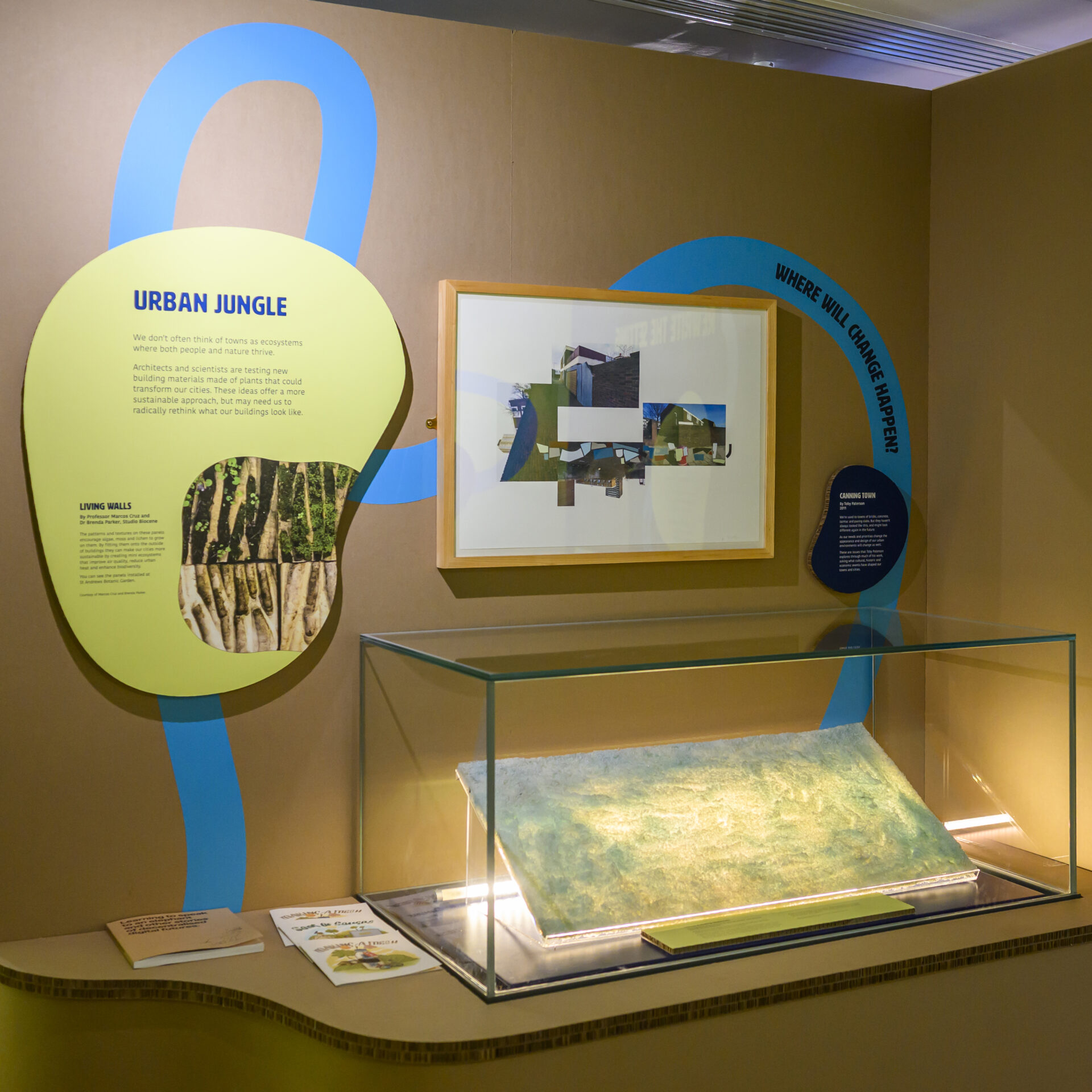
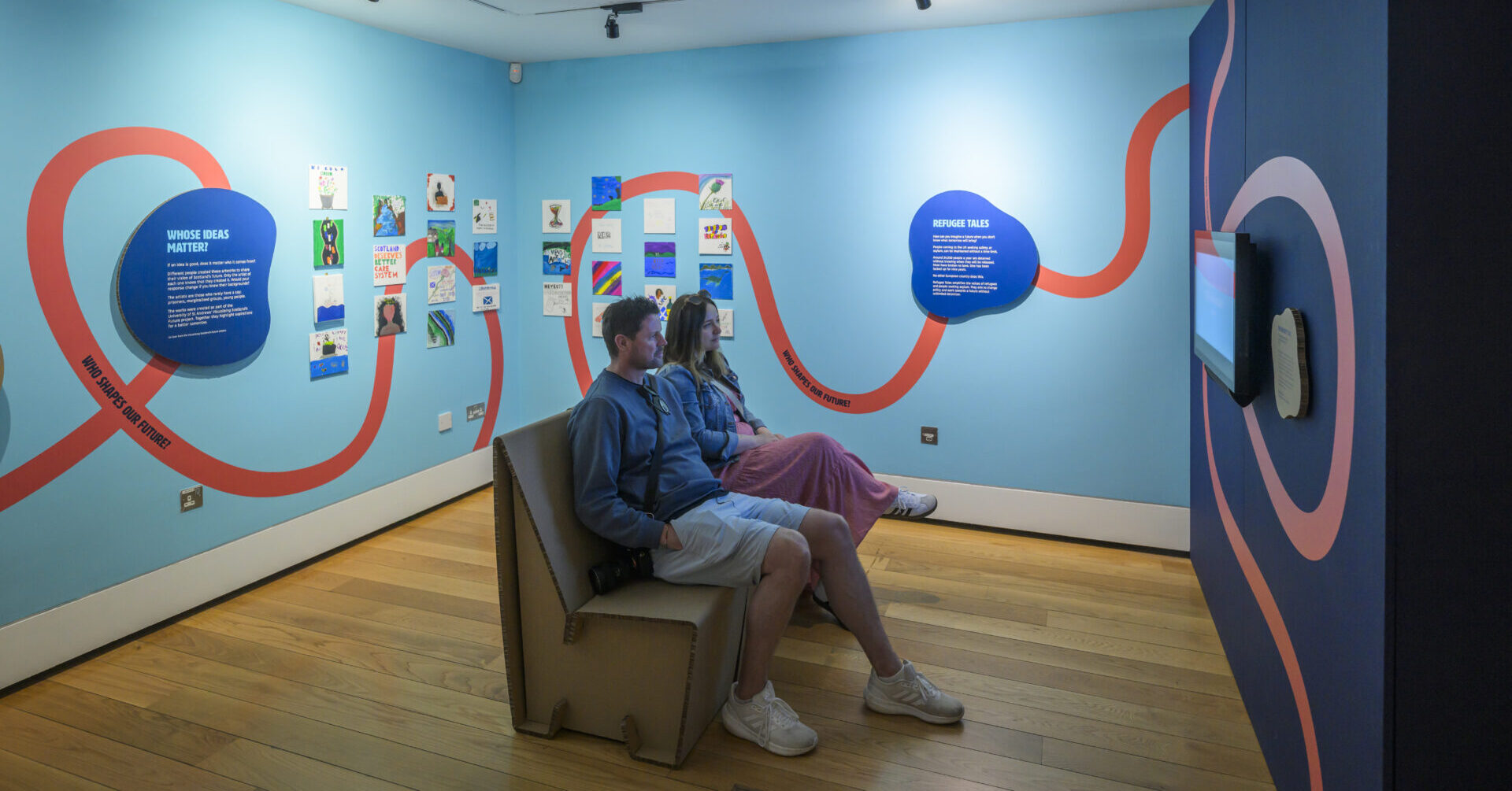
Around 80% of all new exhibition materials were designed to be recycled or reused with purpose.
Engaging Audiences
The exhibition content was developed in partnership with the University’s Museum team and Centre for Critical Sustainabilities. The exhibition went beyond the typical focus of sustainability on environment, and instead posed a series of big questions: Can we have a sustainable future without social justice? How should we rethink our relationship with nature? Who decides how technology is designed and deployed? Can a growth-driven economy survive on a finite planet?
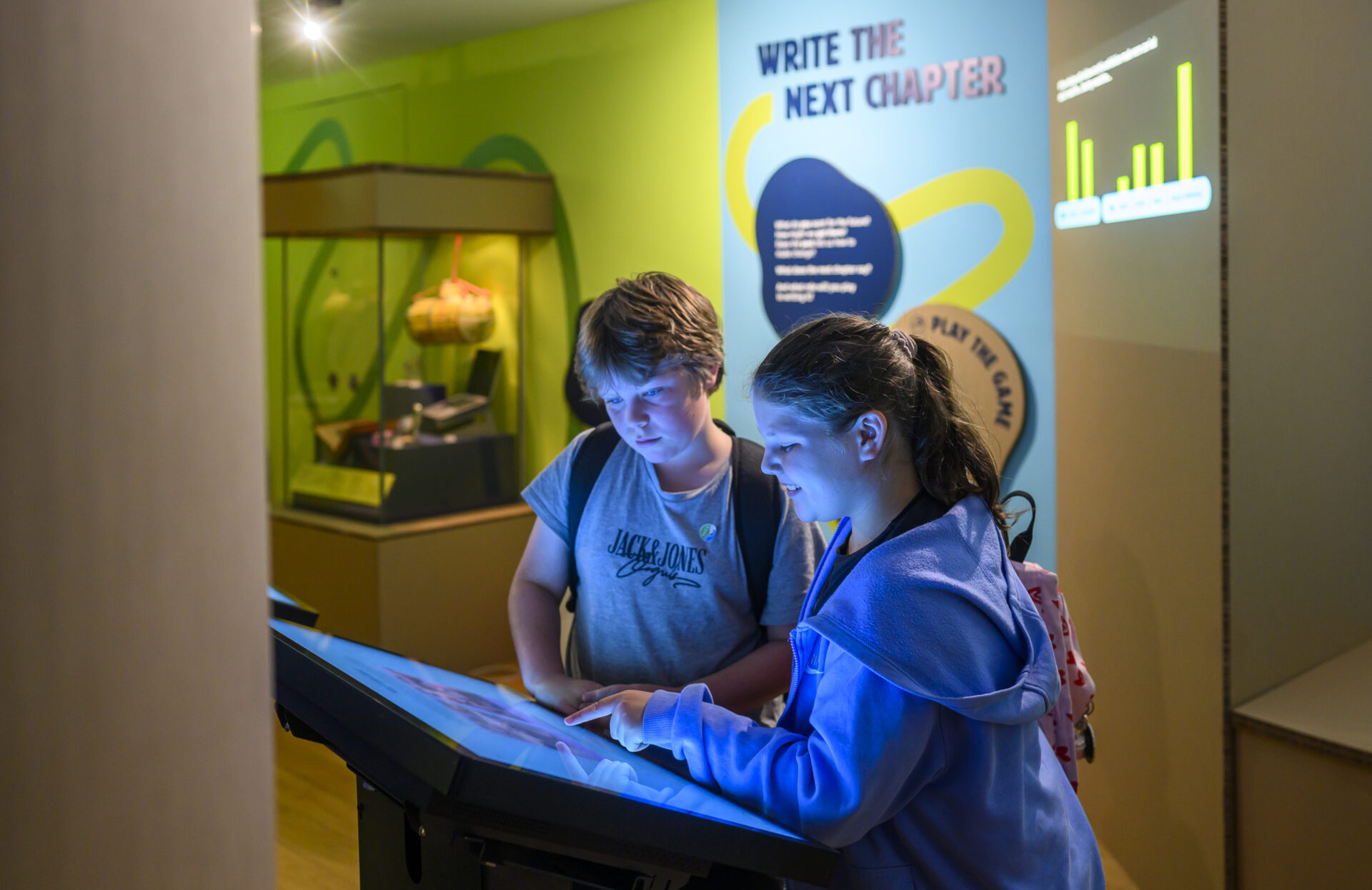
Our role was to make these complex ideas accessible and engaging. Interactive touchscreen games invited visitors to test the consequences of their choices, while a projection screen at the end of the exhibition brought together collective decisions in real time, prompting audiences to consider their collective impact on the future.
Marketing Communications
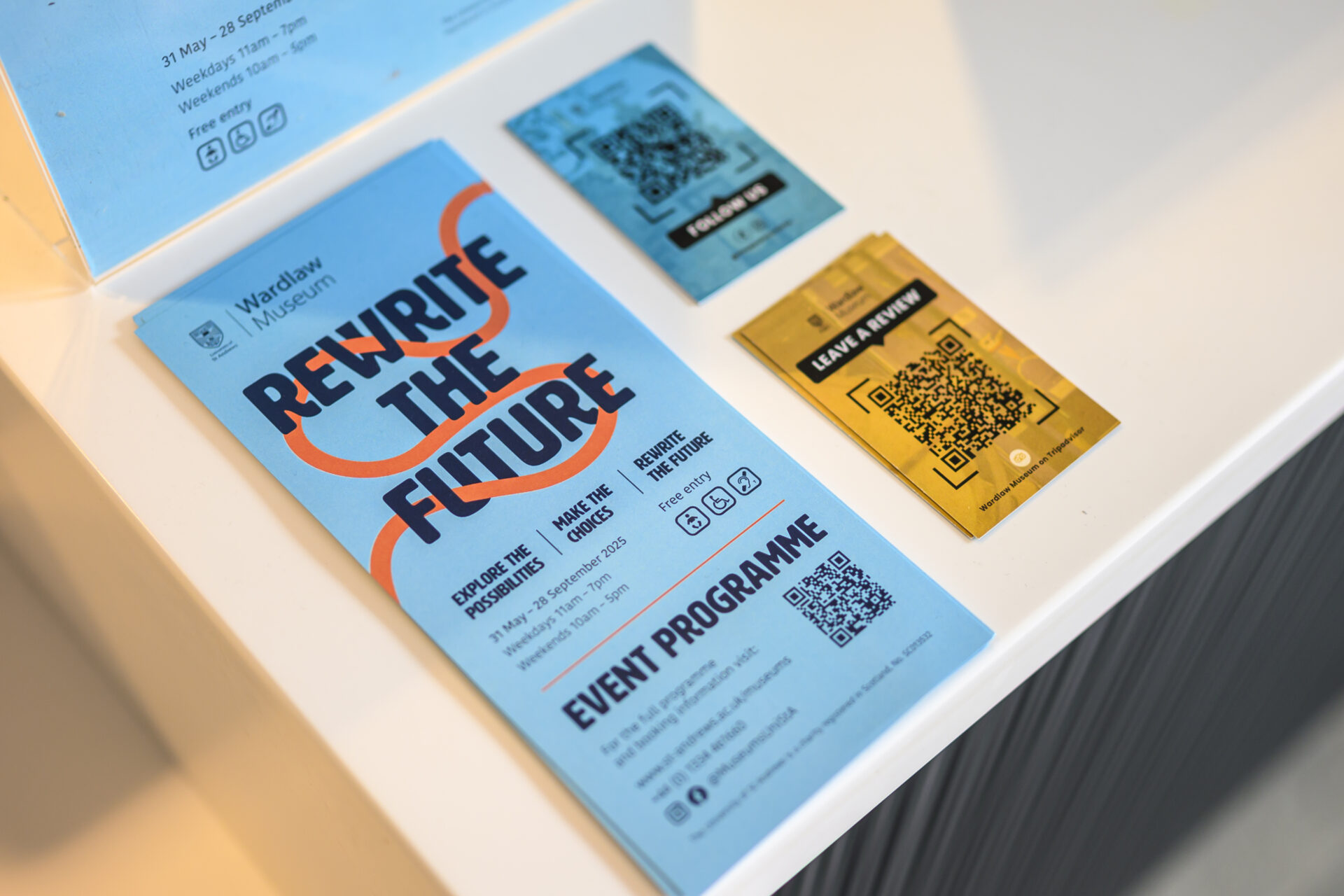
Alongside the exhibition design, we developed a cohesive visual identity to promote Rewrite the Future beyond the gallery. This drew on the ribbon motif which linked the displays throughout. The exhibition branding was applied across print and digital channels, ensuring consistency and visibility. We created large-format promotional posters for internal and external display, as well as graphics for digital screens and social platforms. A printed leaflet advertising the wider museum event programme accompanied the exhibition, extending its reach and reinforcing its identity across all communications.